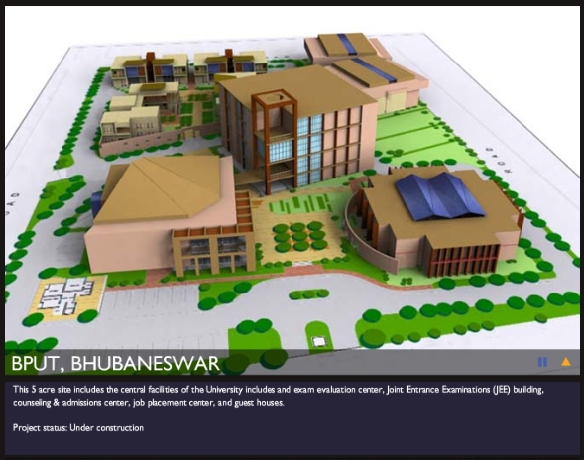
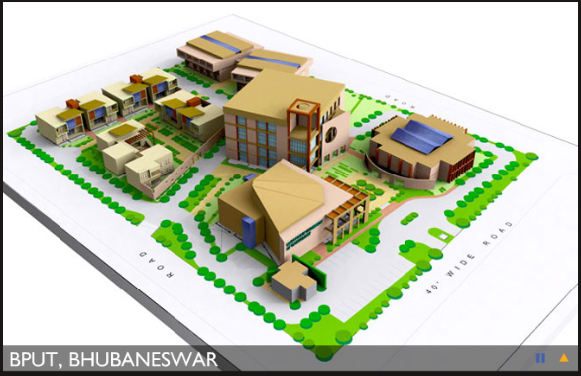
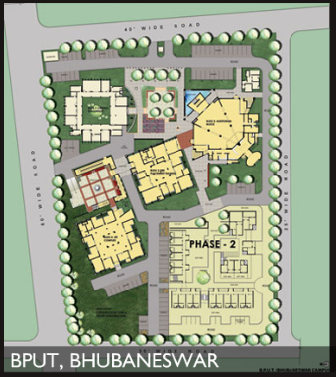
Following is an excerpt from http://articles.economictimes.indiatimes.com/2011-07-08/news/29751942_1_universities-manipal-group-students.
Manipal Group is in active talks with Gujarat and Orissa governments for setting up universities in these states. This is part of group’s plan to have a footprint in all parts of the country. The chain plans to roll out five universities in next five years.
Manipal Group advisor – strategy and development – Sudhakar Rao told ET that all these universities would ideally come up across 200-300 acres each with a total investment of over Rs 6500 crores.
"We have identified Bangalore, Orissa, Gujarat, Haryana and National Capital Region (NCR) for the proposed universities. While land for Bangalore is finalised, we have initiated talks with Gujarat and Orissa governments for land and permissions. Other proposed universities are in conceptual stage," he said.
The Manipal group runs 200 courses including engineering, humanities, management, medicine and allied health sciences with four operational universities – Manipal University, Sikkim Manipal University, American University of Antigua and Manipal International University in Malaysia. Recently, the chain has launched its university in Jaipur which would be spread across 300 acres with an estimated investment of Rs 1200 crore over next five years.
… As per group’s plan, a university in Orissa will cater to the needs of students on eastern region, Gujarat university will cover the western region, Bangalore will absorb the spill over of southern region while NCR and Haryana universities will fulfill the educational needs of north and central regions.
"Each of these universities will be built to have 25,000 students on campus by its 10th year of operation. We also plan a university in Jharkhand. But it will come up in next phase," he said.
Odisha government should help them so that their Odisha plan happens smoothly. Any hurdles and they will focus on the other locations.
July 12th, 2011
Following is from a report in ibnlive.com.
The State Government is planning to start open schools in all the districts very soon to enable over-aged dropouts complete their schooling.
The initiative is being taken under the Orissa State Open School (OSOS) which proposes to set up the open schools on the lines of the National Institute of Open Schooling (NIOS). Students getting themselves enrolled at the open school could either opt for a personal contact programme or a distance education programme to get quality education. For the junior classes, the school would impart education in essential subjects, including arithmetic, reading and writing, alongside pre-vocational training to help them get employment in case they are unable to continue their education. These schools will also offer dozens of new courses so that students can opt for the professional skills best suited to their regional markets.
“The idea has been mooted with an aim of drawing school dropouts back to classrooms by providing them an organised system of education outside of formal schooling,” said School and Mass Education Minister Pratap Jena while speaking to this paper.
He said talks are on with the higher authorities of NIOS to formulate the courses and schooling designs and the Department is expecting to start the open schools during the ongoing academic year. “The open schools are expected to draw a large number of dropouts in the State who want to complete their schooling. The duration of the courses for classes V, VII and X would be of six months each. The detailed modalities for the functioning of these schools are being worked out,” the Minister said. He added that extra care will be taken to ensure that quality of education in such schools is not compromised. The schools would function through a number of study centres which would be established in different districts.
Several other state governments have launched the open-school system to provide educational facilities to over-aged school dropouts to complete their education.
The website of the NIOS is http://nos.org/. Currently one of its 16 regional offices is in Bhubaneswar. Its contact details is:
Sh. Rushi Kumar Rath
Regional Director, Regional Centre – Bhubaneswar ,
Adivasi Exhibition Ground Unit 1, Bhubneswar -751 009, Orissa
Ph: 0674-2740208, Fax : 0674-2597287, E-mail:rcbbsr@nios.ac.in
July 11th, 2011
Update on July 21, 2011: Following is from Samaja.
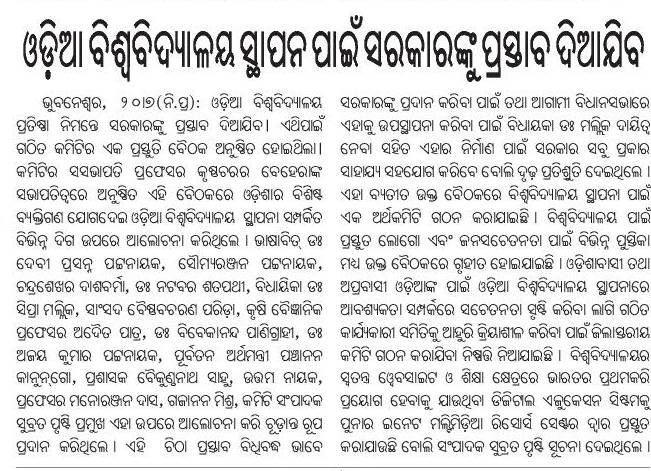
Following is from a report in Times of India.
With an aim to develop Oriya language and to promote the literature, traditions, culture and folklore of the state, a group of Oriya language lovers have come forward to set up an Oriya University. The university has been planned on the lines of Tamil university Tanjavur, in Tamilnadu; Telugu University, Hyderabad, in Andhra Pradesh; and Kannada Universty, Hampi, in Karnataka.
"Even though Orissa is the only state to be formed on the basis of language, unfortunately Oriya language has not got its due. English still remains the primary language used for all government and judicial communiqu’. Despite its richness and antiquity, the growth and development of the language has been restricted over the years," said Gajanan Mishra, founder member of Odia Viswavidyalaya Trust, a lawyer from Titilagarh.
Though the initiative to set up an Oriya University was started a couple of years ago, first concrete steps in this regard were only taken in 2010 with the formation of the trust. "So far we have not faced any challenge or obstacle in the formation of the university. Rather the journey has been quite encouraging and supportive. We are hopeful the dream would be realised soon," Mishra said.
With over 250 active members, including students, academicians, litterateurs, lawyers and politicians, the trust has launched a massive awareness campaign across the state to solicit public support for the university.
"We are planning to table the draft of Odia University bill in the coming assembly session. The proposed university will be set up in a public-private partnership mode in association with the state government," said member of draft committee, Panchanan Kanungo.
In a preparatory meeting here on Sunday, executive members of the Odia Biswabidyalay Sthapana Committee decided to solicit more members from across the state. "The finance committee and draft committee of the university were selected in the meeting. Now we would expedite the work to establish the university at a faster pace," said secretary of the committee, Chitta Ranjan Behera.
A research scholar of Oriya language in Utkal University and founder member of the university trust, Subrat Prusty, said, "The medium of education in the university will be Odia. Emphasis will be given on the development and growth of the Odia language, including phonetics, phonology, morphology, morphophonemics, syntax, semantics, semiotics, preparing pedagogical grammar, comparative vocabulary, lexicon, and language learning."
The university will also deal with history and economics of language use, creation of dialects, sociology dealing with various aspects of sociolinguistics and psychology, dealing with cognitive aspects of Odia. Sciences including acoustic phonetics and scientific discourses will also be taught in the university, founder members said. Separate departments for translation, folklore and culture, manuscriptology, and faculty of Odia development and tribal studies are proposed in the draft bill.
July 11th, 2011
The web page of Orissa Model Tribal Education Society (OMTES) is http://www.omtes.org. Following are excerpts from its "Background" page.
The Orissa Model Tribal Education Society (OMTES), a registered Society supported by the ST & SC Development Department, aims to make positive interventions in the field of tribal education. Since its inception in March 2000, it has been instrumental in setting up 11 Ekalabya Model Residential Schools in different parts of the State with assistance from Government of India. Besides that it also manages 19 Educational Complexes set up for providing education to ST Girls belonging to Primitive Tribal Groups. OMTES continues in its endeavour to serve the tribal population of the State by ensuring them to avail best opportunities in education at par with the non tribal population.
Following are some Q & A from its FAQ page.
How the schools are managed at the district level?
A school level management committee headed by the Collector of the respective districts, members including two educationist of the area looks after the overall development of the schools. Here the collector is the chairman and concerned Principal of ERMS is the Member Secretary.
I am a Tribal, what is the benefit the society has for me?
You benefit, when your child qualifies entrance of the school and receives free qualitative education. The society provides for improving the quality of tribal by promoting educational schemes for tribal community and improves the quality of life of tribal by Ashram Schools, Hostels for Tribal Boys Educational complexes, Post- Matric Scholarships and Book Bank Schemes, etc.
Whom do I contact for more information?
For information you are requested to contact ST & SC Development, Govt. of Orissa.
The 11 schools are listed in the page http://www.omtes.org/Yearwise_establishment_EMRS.html. They are in the districts of Koraput, Mayurbhanj, Sundergarh (3), Rayagada, Koenjhar, Gajapati, Kandhamal, Nabarangpur, and Jajpur.
The 19 educational complexes are listed in the page http://www.omtes.org/Yearwise_establishment.html. They are in the districts of Keonjhar (3), Rayagada (2), Nuapara, Mayurbhanj (2), Deogarh, Angul, Kalahandi, Ganjam, Gajapati (3), Malkangiri (2), Sundergarh and Kandhamala. Each of these complexes have a capacity of 250 making a total capacity of 4750.
In contrast, as of today, KISS has a student body of 15,083, which includes 3553 students pursuing +3. KISS had a student body of 1500 in 2005. I am sure the performance of the students is better at KISS than of the students at the OMTES schools and educational complexes.
So the Odisha government should just give land, seed money and grants to KISS and let them establish and manage much larger facilities in the districts with significant tribal students.
In http://www.kiss.ac.in/admission.html it is mentioned that every year KISS gets 30,000 to 40,000 applications per year for admission and admits between 2000-3000 of them. The government should fund KISS so that if not all who apply are admitted at least half of them are admitted.
It is a pity that other states have taken note of KISS and are inviting KISS to open replicas in their states while Odisha does not seem to be taking similar steps. Following is an excerpt from a report in Pioneer on other states approaching KISS for replicas.
A branch of the Kalinga Institute of Social Sciences (KISS) has been set up in Bastar, a tribal dominated and Maoist infested region of Chhattisgarh with assistance from the National Mineral Development Corporation (NMDC).
An MoU to this effect was signed between the KIIT and the KISS founder Dr Achyuta Samanta and NMDC director GB Joshi in the presence of the NMDC chairman cum managing director Rana Som at the the latter’s Corporate Office in Hyderabad on June 24.
As per the agreement, the NMDC has provided 30 acres of land along with all financial assistance to the KISS in order to set up its replica in Kankar region of north Bastar district in Chhattisgarh. In the first phase, 1000 tribal boys and girls will be admitted in this school. However, a total of 4,000 students from five districts in and around Bastar will get the opportunity of quality education here in course of time.
After Bastar, the Governments of Jharkhand, Madhya Pradesh and Delhi are keen to set up such model schools bearing all financial implications. They have requested Dr Samanta accordingly.
The page http://www.kiss.ac.in/fmngt.html explains how KISS is funded. The total amount there adds up to 18 crores. If 10 such KISS replicas are established in 10 tribal districts of Odisha at an additional cost of 200 crores/year, that will be the best use of such money for Odisha.
July 8th, 2011
Following is from a report in http://www.hindu.com/2011/05/25/stories/2011052567412200.htm.
Union Human Resource Development Ministry (HRD) has asked the Minority Affairs Ministry to make available land and additional resources if its proposal for establishing three universities — in Bihar, Rajasthan and Karnataka — was to be pushed in the Twelfth Five Year Plan. The HRD Ministry has already given in-principle approval to these universities meant to address the “very high deficit as far as Muslim participation in higher education was concerned.”
The Minority Affairs Ministry proposes to set up three universities on Wakf land at Bangalore, Ajmer and Kishanganj — to be known as Tipu Sultan University of Science and Technology (Karnataka), Khwaja Gareeb Nawaz University of Professional, Technology, and Vocational Education (Rajasthan) and Rafi Ahmed Kidwai University of Health and Medical Sciences (Bihar).
While conveying its in-principle approval, the HRD Ministry had pointed out that the proposed universities could not be accommodated in 11th Plan unless additional financial resources were made available as plan outlays are being used up in the 16 new Central universities already established by it and it was the fag-end of the plan period.
During inter-ministerial consultations on the proposed universities, the Minority Affairs Ministry had three options of either starting the universities by the minority community itself on Wakf land and declared as deemed university under the University Grants Commission Act, or to be established under an Act of Parliament declaring them as minority institutions such as the Aligarh Muslim University (AMU), where the Act was amended in 1981 to define the university as established by the Muslims. The third option was to set up the universities as collaboration between the government and the Wakf Board where the latter could contribute by way of land while financing would be done by the government, and Wakf Board representatives would be included in the Senate and managing bodies of the universities.
In the last named collaborative model, one option was that while the universities would be set up under an Act of Parliament, they will not have any explicit minority character; however as provided in Article 46 of the Constitution, a special dispensation could be made for preference to candidates of economically weaker sections.
Another option in the third model was to examine if it was legally permissible to admit Muslim minority students in recognition of the contribution of Wakf land for the purpose.
The expert committee ruled out the option of deemed university; the Ministry of Law and Justice ruled out the second option as it would have been inconsistent with the Aziz Basha judgment of Supreme Court and the Ministry of Minority Affairs is left with the third option.
The HRD Ministry is willing for setting up these institutions in any of the modes …
The HRD Ministry had also suggested an alternative of accommodating the three universities within the AMU as part of ongoing expansion of instead of setting up new universities. The suggestion to establish campuses of AMU at the three places was not agreed to on the ground that the ongoing expansion of AMU has serious misgivings amongst the alumni who feel that off-campuses would dilute the residential character of AMU.
July 6th, 2011
(Thanks to Debi Sarangi for the pointer.)
The strategic plan is available at http://www.cable-quest.in/pdfs/StrategicPlan%20of%20I&B%20ministry.pdf. Following are some relevant excerpts.
(viii) INDIAN INSTITUTE OF MASS COMMUNICATION:
The Indian Institute of Mass Communication (IIMC) is an autonomous organization under the Ministry of Information & Broadcasting and a ‘Centre of Excellence’ in the field of communication teaching, training & research. The Institute was set up on August 17, 1965, as a department of the Ministry of Information & Broadcasting, Govt. of India in response to a need felt to evolve a methodology for effective use of communication resources as part of the country’s overall development strategy. The Institute was registered under the Societies Registration Act (XXI) of 1860 on 22nd January, 1966 and receives grant-in-aid from the Govt. of India through the Ministry of Information & Broadcasting to meet its recurring & non-recurring expenditure. While IIMC provides knowledge and skills to communicators in a variety of disciplines, including print, photography, radio & television, development communication, communication research, advertising & public relations, the Institute also collaborates with national & international agencies in conducting seminars, training, workshops, etc. It also undertakes joint research projects and organizes short- term courses to meet the specific needs of the industry, government and public sector organizations. The Institute presently have a branch at Dhenkanal in Orissa and propose to set up four new Regional Centres in the States of J&K, Kerala, Mizoram and Maharashtra.
(v) Indian Institute of Mass Communication (IIMC) (http://iimc.nic.in/)
Run courses with the objective to produce well-equipped communication professionals sensitive to needs of changing mass communication scenario; Conduct of short term specialized courses to meet the professional training needs of media personnel working in the Central/State Governments and Public Sector Organisations;
Conduct of seminars, symposia and conferences on various themes of communication with a view to contributing better understanding of communication in the context of India and other developing countries; Provide consultancy services on request to Central/State Government Departments and Public Sector Undertakings, in designing and organizing training and research programmes related to Development communication.
(a) The following steps needs to be taken –
1. First step
* Up-Gradation of One-Year PG Diploma Courses into Two-Year Advanced PG Diploma Courses.
* Seeking of Equivalence to Masters Degrees for the Two-Year PG Diploma Courses from Ministry of HRD.
* Introduction of at least 2 new Two-Year PGD Courses: in Development Journalism and in Corporate Communication & Media Management.
* Setting up of 4 new Branches ofIIMC in J&K, Mizoram, Maharashtra & Kerala.
2. Second step
* An Act of Parliament to declare IIMC an ‘Institute of National Importance’ such as the IITs, AIlMS, NIFT, etc., thereby also giving it Degree-granting powers.
* IIMC proposes to continue using its established and well-recognised Brand arne, as in the case of the above Institutes.
Upgradation of branches to full-fledged Institutes offering all Courses at par with IIMC, Delhi.
* Provision of Buildings, Infrastructure, and expansion or Technical Equipment and Human Resources at the 4 new Branches of IIMC (DPRs to be prepared after allocation of land by State Governments and in-principle approval of the Planning Commission).
* Dialogues with various State Governments for opening of new IIMC Branches in their States and pursuing them to allot at least 10-15 acres of land free of cost and also made available temporary accommodation for start of the courses from 2015-16.
3. Third Step
* Introduction of Specialized and Niche Courses (a) At least 2 new Two-Year PGD Courses
(i) Development Journalism
(ii) Corporate Communication and Media Management (b) More extensive Courses leading to better job prospects for students (c) Advanced academic programmes such as M.Phil and Doctoral Programmes (d) More Post Graduate MA, M.Phil. and Ph. D. Programmes
* Enhanced National and International recognition of IIMC and its programmes and enhanced interaction with the best international Universities and institutes in the field.
* Access to research and training funds from National and international funding bodies.
* Creation of IIMC Affiliates abroad.
* Correspondence with International Media Institutions/Government for opening of Centres in their Countries.
(b) Requirement of resources (i) Financial
* IIMC has already been sanctioned an outlay of Rs. 51.50 Crores for the activities mentioned in the first step as above
* Based on the current trend of requirements, provision of buildings, infrastructure and expansion of technical equipments for a branch for establishing a permanent campus will be approximately Rs. 100 Crores, excluding the cost of land, which would be provided by the State Governments free of cost ( Total Requirement for four branches will be Rs. 400 Cr)
* Financial requirement for the introduction of various Advanced Courses, M.A., M.Phil. and Ph.D. will be approximately Rs. 10 Crores
* Financial requirement for introduction of new branches in other States will be approximately Rs. 5 Crores in temporary accommodation to be provided by State Governments free of cost
Total Requirement : Rs. 415 Cr
(ii) Human Resources –
* 150 personnel will be required to achieve the activities detailed in the first steps
* Additional 25 personnel per branch will be required for fulfilling the activities given in the next steps
July 4th, 2011
The following table is extracted from http://jee.iitd.ac.in/openclose2011.php at two different times. The black version is after the first round and the red version is after the 3rd round.
| Institute |
Open EE (11) |
Close EE (11) |
Open ME (24) |
Close ME (24) |
Last rank |
| IIT Bombay (B) |
1
1
|
105
106
|
74
74
|
385
385
|
3615 (B44-Chemistry)
4182 (B44-Chemistry)
|
|
IIT Delhi (D)
|
43
43
|
205
207
|
228
228
|
564
574
|
3396 (D63-Biochem & Biotech)
3469 (D63)
|
| IIT Madras (M) |
131
131
|
380
380
|
327
327
|
771
771
|
3851 (M65-Biotech.)
3962 (M65)
|
| IIT Kanpur (K) |
45
45
|
537
556
|
246
246
|
839
840
|
4950 (K44-Chemistry)
5901 (K44)
|
| IIT Kharagpur (G) |
585
585
|
893
894
|
848
848
|
1083
1083
|
7426 (G39-Architecture)
7894 (G39)
|
| IIT Roorkee (R) |
814
814
|
1688
1709
|
1209
1209
|
1800
1806
|
8141 (R39-Architecture)
8964 (R39)
|
| IIT Guwahati (W) |
W16-1512
W16-1512
|
W16-2154
W16-2194
|
1725
1725
|
2443
2470
|
6556 (W38-Design)
6608 (W38)
|
| IIT Hyderabad (H) |
1943
1943
|
2736
2843
|
2274
2274
|
2922
3073
|
3478 (H07-Chemical)
3675 (H07)
|
| IT BHU (V) |
1844
1844
|
2945
2949
|
2514
2514
|
3155
3222
|
6811 (V40-Pharma)
7902 (V40)
|
| IIT Gandhinagar (N) |
2369
2369
|
3164
3164
|
2122
2122
|
3326
3455
|
3882 (N07-Chemical)
4076 (N07)
|
| IIT Bhubaneswar (A) |
3106
3134
|
3803
3822
|
3347
3347
|
4049
4147
|
4509 (A09-Civil)
4684 (A09)
|
| IIT Indore (U) |
3446
3446
|
3836
3879
|
3366
3366
|
3972
4092
|
3972 (U24-Mech)
4092 (U24)
|
| IIT Ropar (E) |
3017
3473
|
3859
3928
|
3441
3441
|
4025
4101
|
4025 (E24-Mech)
4101 (E24)
|
| IIT Rajasthan (J) |
3181
3530
|
3921
4127
|
3545
3545
|
4131
4280
|
5172 (J35-System Sc.)
5809 (J35)
|
| IIT Mandi (C) |
3786
3786
|
4318
4460
|
3965
4430
|
4415
4648
|
4415 (C24-Mech)
4648 (C24)
|
| IIT Patna (P) |
3659
3659
|
4400
4479
|
3324
3324
|
4474
4586
|
4474 (P24-Mech)
4586 (P24)
|
| ISMU Dhanbad (S) |
3380
3850
|
5027
5509
|
3357
3542
|
4932
5460
|
6746 (S44-Chemistry)
7785 (S44)
|
Among the new IITs the preference this year seems to be H > N >> {A, U, E} > J > {C,P}.
June 30th, 2011
Following is an excerpt from Shilpi Sampad’s report in Telegraph.
A university official said the sale of forms have soared this time as compared to previous years. Around 6,100 forms have already been sold at the two counters as against 7,000 last year. “We are expecting 2,000 more forms to come in. There has been an increase in sale of forms probably because more students are now opting for traditional and regular subjects,” the official said …
Following is an excerpt from a report in Times of India.
While there is just one applicant for statistics, which has 16 seats, there are very few aspirants for anthropology, food technology, bioinformatics electronics and home science.
Tripathy said there are very few colleges offering statistics at the graduation level. Hence, very few students want to pursue post-graduation in statistics. On the other hand, there are 66 applicants for 16 seats in MA or MSc mathematics.
The home science department this year has just four applicants for 16 seats. "This may be because the course had a new nomenclature this year. It was earlier called MA/MSc in home science. From this year, the varsity has changed it to MA/MSc home science (nutrition and human development) ," Tripathy said.
The varsity has got a record 250 applications for MSc Physics which has 24 seats. Some of these students will be given option to take admission in MSc electronics which has received around 10 applications for 20 seats.
The Sambalpur University Institute of Information Technology, which offers the bioinformatics and electronic courses, said students who have applied for MSc life sciences but failed to secure a seat will get a chance to take admission in MSc bioinformatics.
… Besides physics, departments of chemistry, English, sociology and political science also have received huge number of applications.
The varsity has got over 230 applications for 24 chemistry seats and 88 applications for 24 English seats. The varsity has got around 1800 applications this year for various PG courses compared to 1500 applications last session, varsity officials said.
June 29th, 2011
Update (July 5 2011 news): Due to political uncertainty in Hydearbad IIM-A and XLRI coming to Hyderabad is on hold. See http://businessstandard.com/india/news/iim-a-xlri-put-hyderabad-entryhold/441546/.
Following is an excerpt from a report in mydigitalfc.com.
Institute of Management Technology, Ghaziabad is setting up its campus in Hyderabad. …
This apart, Narsi Monjee Institute of Management Studies (NMIMS), rated among the best business schools in India, too will start its new campus at Jadcherla, Mahabubnagar district.
This is all set to come up with an excellent infrastructure in two years involving an investment of approximately Rs 35 crores in the first phase. …
The GMR group is associating with SCHULICH School of Business, one of the top business schools in the world and is a part of York University, Toronto, Canada.
It is setting up an international business school in Hyderabad, which will make efforts to promote business education with a global perspective.
… Hyderabad is already home to ISB, IIIT, IIT, BITS Pilani, Nalsar Law University, ICICI Knowledge Park, Genome Valley, University of Hyderabad. It also boasts of Institutes of excellence, research and development establishments and a large number of universities.
… Last year, Andhra Pradesh also invited IIM- Ahmedabad (IIMA) to set up a satellite campus near Hyderabad. This was supposed to be a seamless campus for which the IIMA will make the admissions for it. The faculty will be part of the IIMA.
The state earlier had also invited Tata Institute of Fundamental Research, CMC Vellore, Birla Institute of Technology (Pilani) and others to set up centres in the state.
June 29th, 2011
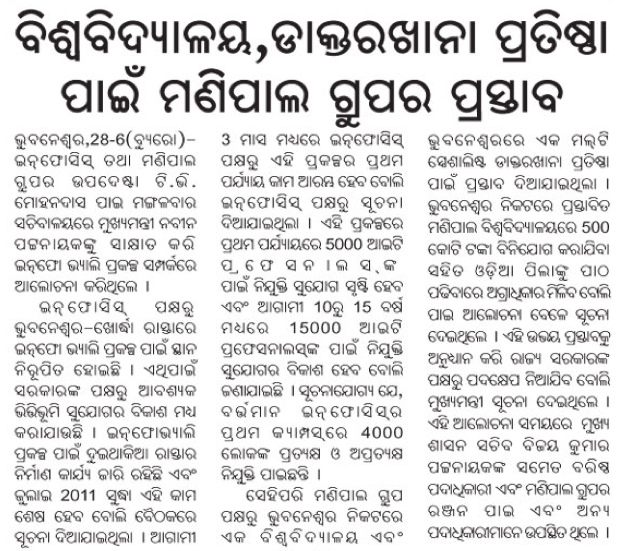
More information on Manipal can be found in http://en.wikipedia.org/wiki/Manipal and its official website at http://www.manipal.edu.
Among its various constituents the following have been ranked:
Some of its other salient features are (from its factsheet):
- Manipal has several international campuses including the Sikkim Manipal University. The other international campuses are in Malaysia, Nepal and Dubai.
- Over 300 courses offered across 14 professional streams in over 25 colleges
- India’s largest Foreign exchange earner in its category
- Over 1,20,000 students and 3,00,000 alumni from over 52 countries
- Established in 1953, Manipal University is the first educational Institution in private sector to become a deemed University; Over 20,000 students from over 52 countries
- Over 3000 practicing doctors in the US and every 4th doctor in Malaysia is an alumnus of
Manipal.
- SMU has two constituent institutes – Sikkim Manipal Institute of Medical Sciences (SMIMS) and Sikkim Manipal Institute of Technology (SMIT)
- Dubai Campus: Set up in September 2000 and is currently located in Dubai International Academic City; Has over 1400 students from over 20 countries, enrolled in its various specialized programs
Finally, Manipal is in the process of establishing Manipal International University in Jaipur. They are taking students from this year. Following is an excerpt from that page.
On invitation by Govt. of Rajasthan to Manipal Group, to start a multi-disciplinary Private University, Manipal International University, Jaipur, in the state comprising of courses in different disciplines like Engineering, Medical, Hospitality, Allied Health, Management, Communication, Jewellery Management etc.
… Allotment of 100 Acres of land at Dehmi Kalan Village near Jaipur in for the proposed campus.
June 29th, 2011
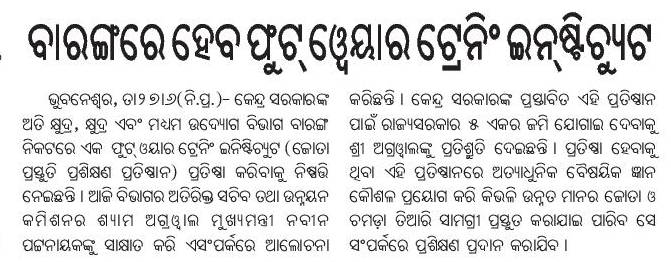 Currently MSME has two central footwear training institutes in Chennai and Agra. Their websites are:
The Ministry of commerce also has similar institutes which are called Footwear design and development institute. The HQ is in NOIDA with campuses in Noida, Fusatganj, Chennai, Kolkata, Rohtak, Chhindwara & Jodhpur. The one in Jodhpur is a recent one; announce in March 2011.
While the Footwear training institutions focus on manufacturing the FDDIs focus on design and management. The former offers short term and diploma courses while the latter offers B.Sc and M.Sc programs.
June 28th, 2011
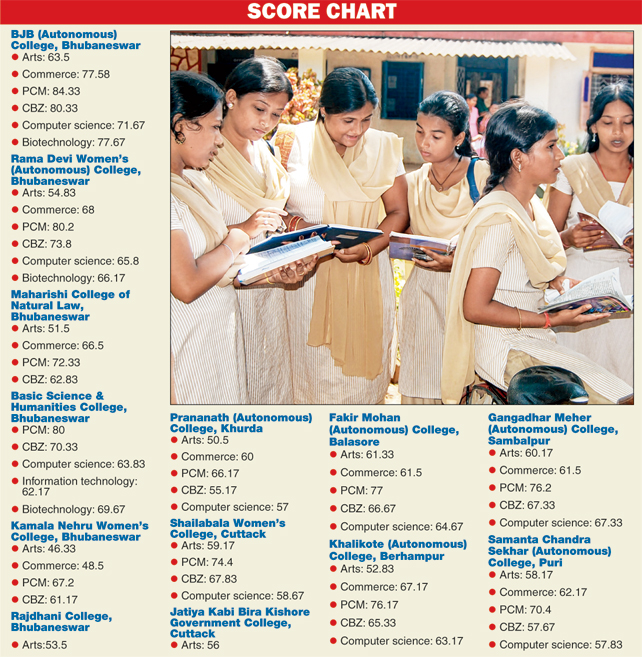
This year 162 degree colleges are participating in e-admission to their B.Sc/B.A/B.Com programs. Following are some numbers on this process from a Telegraph report.
After the announcement of Council of Higher Secondary Education (CHSE) or Plus Two results on May 30, students had applied to colleges of their choice online. Higher education officials said they had received a total of 74,968 application forms.
Around 48,019 candidates have been shortlisted according to the first selection merit list. …
In Bhubaneswar, BJB (Autonomous) College has increased the qualifying marks by one to five per cent in separate subjects for general students. In the arts stream, the cut-off mark for the general category was announced as 63.5 per cent as against 58.67 per cent last year. In commerce, it is 77.58 – an increase of over one per cent from the previous year. The science subjects, too, have seen a substantial rise. For physics-chemistry-mathematics (PCM) combination, it is 84.33 per cent, against last year’s 84.20 per cent, and in chemistry-botany-zoology (CBZ) combination, the cut-off is 80.33 per cent as against 78.5 per cent last year.
… Srilekha Ray, principal of Ramadevi Women’s (Autonomous) College here.
“We have raised the qualifying marks by over 10 ten er cent in PCM, around nine per cent in CBZ, seven per cent in arts and two per cent in commerce for the general category,” she said.
June 25th, 2011