An afternoon-evening trip to Chandaka-Dampada Sanctuary

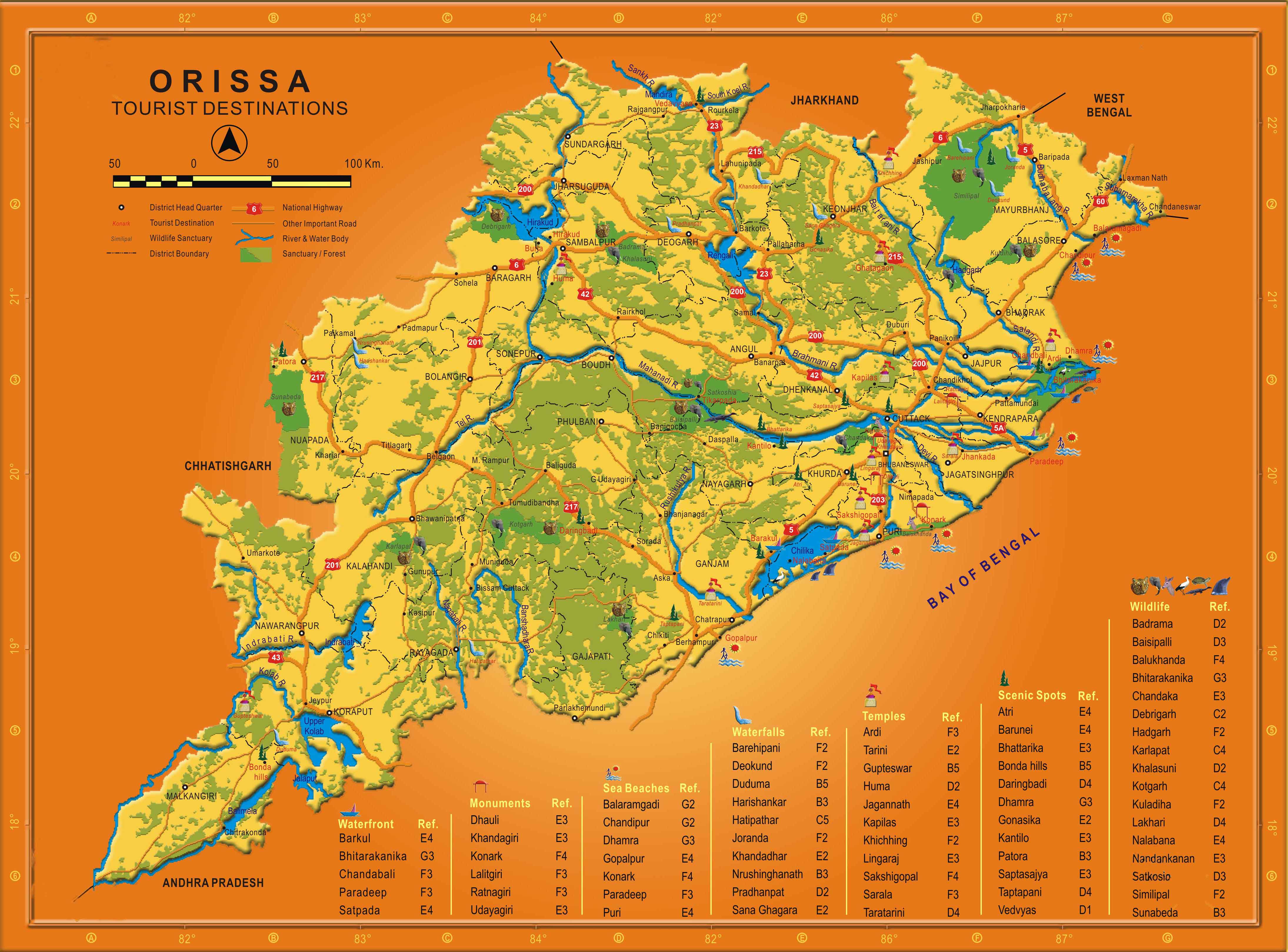
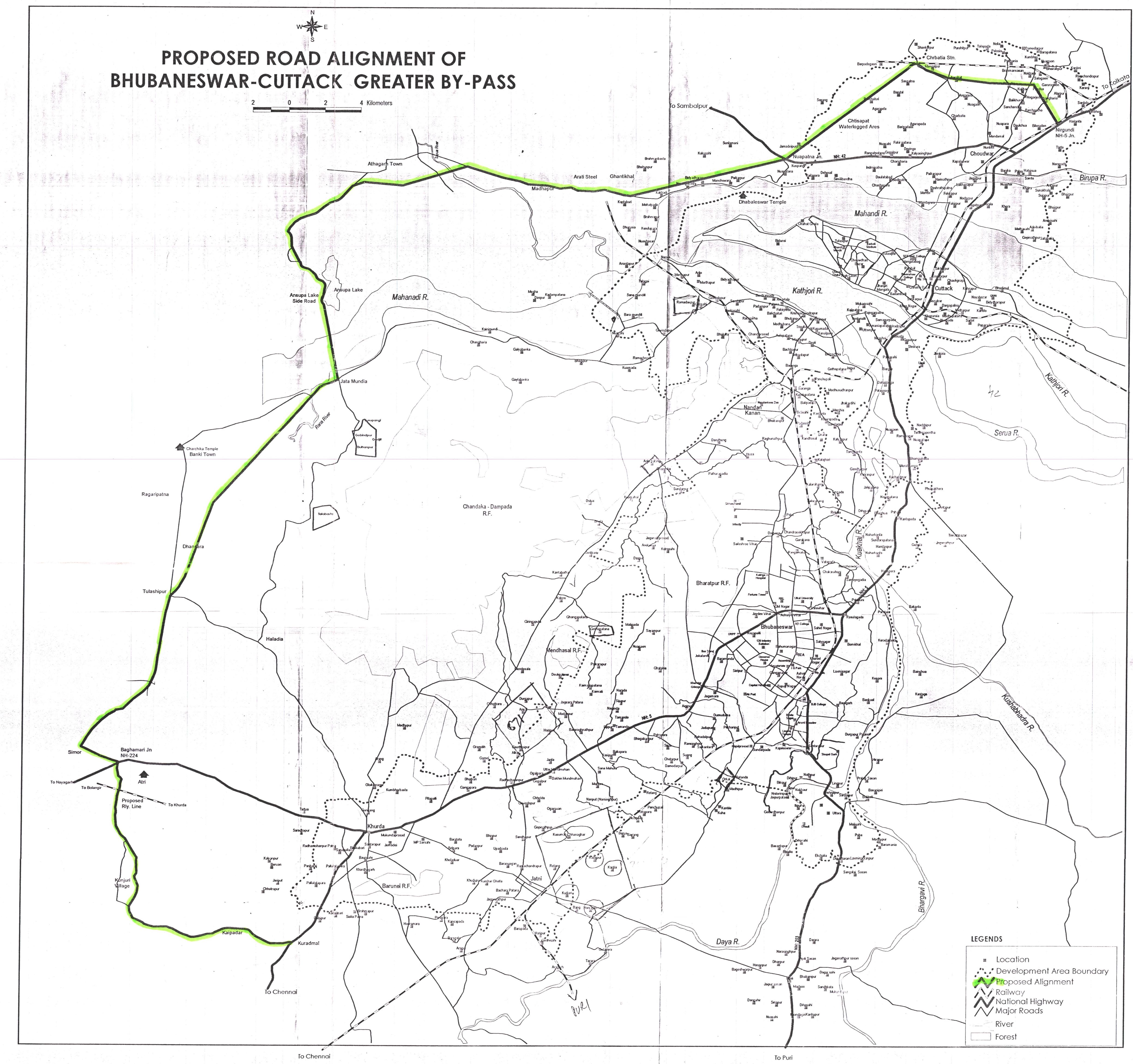
I finally decided to visit the Chandaka-Dampada Sanctuary which is adjacent to Bhubaneswar. We entered the sanctuary through the Godibari gate.

The above sign was visible from the road.

The above is the outer gate to the sanctuary.

The inner gate is beautifully made.

As soon as you enter the gate the above is the view of the forest with a dirt road bisecting it.

Looking back at the gate one can see the moat and the mechanism to prevent the elephants to get out. However, the elephants do get in and out of the sanctuary through other gaps in the boundary moat.

The dirt road has signs to a few destination points; the first one being the Kumar Khunti watch tower.

On the way we pass through an old structure that was part of the fort of the local king.

The above is the view from the top of a watch tower looking towards the dirt road that took us there.

In the other direction there is a lake.

About 100 yards from the watch tower there is a man made salt mound to attract the elephants.

The watch tower is a four story structure with two bed rooms in each of the second and third floors. Guests can stay there overnight. We peeked at the bath room. They looked clean. Near the watch tower there are huts where some staffs stay. The staff bring water to the watch tower rooms  and cook food for guests.

The above is a closer view of the salt mound.

Ambilo watchtower and Dampara gate are two other landmarks. Note the distance; 20 kms of forest road to the Ambilo watch tower. The whole sanctuary is 193 sq kms, almost as big as present day Bhubaneswar city limits.

With the dirt road giving us the view of only a very small part of the forest we did not see many animals. Above we saw  a few jungle fowls.

We also saw a few jungle peacocks.

This is the lake made due to the Deras dam.

Near the lake there were nicer guest houses. The elephants don’t come here. Hence they are not elephant proof.

The view of the Deras lake is beautiful. But it was getting dark. So I could not take very many pictures.

As it was getting dark and we did not have plans to make an overnight stay, we could not visit the Ambilo tower. We got out through the Kantabada gate which is near the Dearas dam.

June 1st, 2009 | Chitta Baral | No Comments

Rourkela MLA and minister of state is in the right track; time for a CDP and a greater Rourkela

Following is an excerpt from a report in Expressbuzz.com.

Minister of State (independent charge) for Food Supplies and Consumer Welfare Sarada Prasad Nayak today outlined his plans for all-round development of his home city Rourkela by including it in the Comprehensive Development Plan (CDP).

Addressing mediapersons here, Nayak spoke about formation of greater Rourkela by including suburban pockets like Kalunga, Vedvyas and Fertiliser Township under the Central Government funded CDP. He said if everything goes as expected, in three years the Steel City would get a facelift with a fresh sewerage system, solid waste management project and rehabilitation of slum-dwellers on a 30-acre land. …

June 1st, 2009 | Chitta Baral | 2 Comments »

State Level Single Window Clearance Authority (SLSWCA) clears many projects

Following is an excerpt from a report in Business Standard.

The State Level Single Window Clearance Authority (SLSWCA) headed by the chief secretary Ajit Kumar Tripathy today cleared five projects worth Rs 2807.7 crore.

…out of the 12 proposals considered by SLSWCA, the proposal of Bhubneswar Power Private Ltd for setting up of a 2X67.5 Mw CPP was deferred. The energy department has been asked to consider the proposal from the policy point of view.

Two major investment proposals by Vedanta Aluminium Ltd (VAL) and Hindalco Industries were partially approved in today’s meeting due to non-availability of bauxite and pending the environmental carrying capacity study by the Orissa State Pollution Control Board.

VAL had proposed to expand the capacity of its refinery at Lanjigarh from one million tonne per annum (MTPA) to 6 MTPA and the smelter plant capacity from 0.25 MTPA to 1.6 MTPA. Besides, the capacity of the CPP was proposed to be raised from 674 Mw to 1350 Mw with a combined investment of Rs 37,440 crore.

The company had signed MoU with the Orissa government for the present capacity at an investment of Rs 12,400 crore. However, SLSWCA only recommended for a smelter capacity of 0.5 MTPA as the company had already achieved this level. It also approved the capacity expansion of the CPP to 1350 Mw as sought by the company. The additional smelting capacity will be considered only after ascertaining the availability of bauxite and receipt of the OSPCB study on environment. Similarly, Hindalco Industries Ltd (Aditya Aluminium) had proposed to expand its alumina refinery capacity to 1.5 MTPA from 1 MTPA at present.

Along with this, the company also sought expansion of its smelting capacity to 0.72 MTPA from 0.26 MTPA and increase in the CPP capacity to 1650Mw from 650 Mw.

SLSWCA has decided to recommend a marginal increase in the smelting capacity from 0.26 MTPA to 0.36 MTPA and CPP capacity from 650 Mw to 950 Mw to the HLCA.

It also put conditional approval to the proposal of the Tata Sponge Iron Ltd. to set up a 1.5 MTPA steel making capacity along with a 52 Mw CPP at an investment of Rs 3101 crore. While the existing sponge capacity of the company is 0.39 MTPA, it had sought to expand its capacity by 0.45 MTPA to 0.84 MTPA.

Similarly, the company proposed to set up one MTPA blast furnace and 1.6 MTPA pellet plant in a separate location in Keonjhar district. It will have to increase the steel making capacity first and after that the increase in the sponge making capacity will be allowed.

The other projects which were approved include 4 MTPA iron ore beneficiation plant at an investment of Rs 360.85 crore to be set up by Kolkata based Rashmi Metaliks at Nayagarh in Keonjhar district.

Similarly, the Rs 624.7 crore investment proposal of Rungta mines, Shyam Steel Industries proposal for setting up 2 MTPA iron ore pelletisation plant were cleared by the SLSWCA. Besides, the Toshali Cement’s proposal to expand its capacity to 2100 tonne per day from 600 tonne per day along with 3.96 lakh tonne per annum grinding unit at Choudwar was also approved.

The proposal of Orissa Thermal Power Corporation, a joint venture between Orissa Hydro Power Corporation (OHPC) and Orissa Mining Corporation (OMC) to set up 2000 MW power plant at Rengali at an investment of Rs 8250 crore also received the nod of the committee.

Jindal India Thermal Power’s proposal to increase the capacity from 1200 Mw to 1800 mw and Lanco Bhawan Power’s proposal to increase its capacity to 2640 Mw from 1230 Mw were approved for recommendation to the HLCA on the basis of strong recommendation of the energy department.

In another significant decision, SLSWCA decided not to allow any more cement plant in the state except Malkangiri district as the state does not have sufficient amount of limestone.

May 31st, 2009 | Chitta Baral | No Comments

Orissa (outside of Kandhamal) voters not fooled by hatemongers; unfortunately that is not the case in Mumbai and Bangalore

Update: JD-U is wising up in Bihar and Jharkhand. As I mentioned before, unless BJP changes track, its fate in many other states will be like its fate in Orissa. Personally, I would like a proper national alternative to Congress. Thus I hope BJP will learn from its mistakes and take a hint from what its few allies like JD-U are saying.


Following is an excerpt from a report in Times of India.

The JD(U) on Saturday launched an attack on BJP for facilitating Congress’s victory in the Lok Sabha polls by raising Hindutva issues rather than focusing on issues that had to do with the common man.

The party identified Varun Gandhi’s alleged hate speech and the sudden insertion of Gujarat chief minister Narendra Modi in the campaign frame as BJP’s two missteps which allowed Congress to corner victory when it ought to have been on the backfoot for issues like price rise and unemployment.

The details of the discussion, however, were yet another reminder of the strain in the NDA alliance in Bihar, and reinforced the estimate that a resurgent JD(U), that under Nitish Kumar aspires to rule Bihar on its steam, could be chafing at the partnership with the BJP.

JD(U) MP N K Singh’s interview where he emphasized that the party shared a commonality with the Congress on the issue of secularism.

The writing is clear for BJP. It can listen to its few remaining allies and become a real national alternative or put its head in the sand and write its own epitaph.


Following is an excerpt from an article in Expressbuzz.com.

After 26/11, it seemed like all of Mumbai had become one, rising above language and religious divides. Had the English media got it all wrong again? Five months later, 22 per cent of Mumbaikars voted for the same man who made his name by having helpless poor North Indians bashed up, supposedly to protect the interests of Marathi-speaking locals. Most of these voters would have otherwise voted for the Sena, another party driven by hate and violence. Together, MNS-Sena votes in Mumbai accounted for more than what the Congress-NCP combine got; the split in their vote led to the victory of the ‘secular’ Congress-NCP in the city (except for Priya Dutt, whose victory margin outstripped the vote tally of the MNS candidate).

After all the hullabaloo about the 1984 Sikh killings, the party universally alleged to have been associated with the killings got voted in. The Congress bagged a remarkable 57.11 per cent in Delhi. The party won in Punjab too, getting almost half the votes. And in Orissa, where Adivasis have been resisting POSCO and other corporate land-grabbers, the man who backed the latter has been given the state on a platter.

Where does all this leave those who have fought for the rule of law, for women’s rights, against the current savage pattern of development? Which of the new MPs will raise these issues in Parliament? The Young Turks? Their fathers never did; why would they? They owe their position to their surnames; in fact, they aren’t Young Turks at all. In Orissa, the BJP almost got wiped out; Abdul Madani fell flat in Kerala. But it’s difficult to accept that Bangalore and Mangalore’s voters ignored the barbaric assault on young women; that lakhs of Mumbaikars endorse Raj Thackeray’s goons.

May 28th, 2009 | Chitta Baral | 4 Comments »

Manmohan’s 2nd innings also starts with humiliating Orissa

Update: The media coverage of the insult and its reaction is being archived at http://upainsults.orissalinks.com/.


When Manmohan Singh became the PM of India in 2004 one of the first things his government did was shift an announced for National Institute of Sciences (NIS) in Bhubaneswar to Kolkata and when Orissa MPs discussed with him about Orissa’ development he is reported to have replied "Money does not grow in trees." It took Orissa-wide demonstrations and a supreme court case for Dr. Singh to make amends and declare the establishment of a National Institute of Science Education and Research in Bhubaneswar. In 2004 he humiliated Orissa by not having a single minister from Orissa. Eventually he added a minister of state from Orissa. Somewhat similar to the NIS case, Dr. Singh’s HRD minister of state had mentioned in a speech in Patna that there will be an IIT in Orissa, but subsequently Orissa was not in the list. Again, after a lot of protests and demonstrations in Orissa, the PM  included Orissa as one of the locations of a new IIT.

Fast forward to 2009 and now Congress gets 6 Lok Sabha MPs from Orissa, 4 more than what it had in 2004. Among the 6 MPs is an ex-chief minister and a tribal (Hemanada Biswal)  who beat the national vice president of BJP in winning his seat, an ex-cabinet minister of parliamentary affairs and tourism, (Srikant Jena), an ex-minister of state of Railways (Bhakta Das), an ex state minister (Amarnath Pradhan), and two young MPs (one of them a tribal).

It is the PM’s prerogative to chose his team and there is no requirement that there has to be ministers from each state. After all these ministers are supposed to be ministers of all of India and it should not matter  where they come from or what their caste is; all that should matter is that they are qualified and they have the PM’s confidence. So objectively one shouldn’t have a problem that he has chosen only one minister of state from Orissa and chosen 3 cabinet ministers and one minister of state from Karnataka, where it got 6 MPs, the same number as Orissa. But the insult to Orissa comes from his demotion to the minister he chose from Orissa. He has picked as a minister of state, not even with independent charge,  Mr. Srikant Jena, who was earlier a cabinet minister  of India and had Parliamentary affairs and tourism as part of his portfolio. If Dr. Singh did not have confidence in Mr. Jena he need not have picked him. But what is he trying to convey by picking him and giving him a demoted position other than showing his and his party’s continued dislike and insulting attitude towards Orissa.

Dr. Singh: You have won the mandate and I guess like your earlier insult to Orissa when you were reported to have said "Money does not grow in trees", you can do whatever you like. But India is watching and they can see how you continue to insult a state and its people. People of Orissa, including those who recently voted for Congress, are fast losing faith on you and are dreading the next five years, where your ministers will take their booties to their home state.

This is not suppose to happen; your ministers are supposed to look after the whole country and not their own state; but based on the past 5 years, where your ministers have focused less on India as a whole and more on their own states, India’s poorer states, with little representation in your ministry are going to get poorer. For introspection, you may look at your past Railway minister’s boasting about what he did for his home state and compare it with states like Orissa from where it got the most revenue, and what you and your past HRD minister have done for higher education and science and technology for your respective home states.

As per Orissa, it seems like humiliating Orissa is your favorite sport or perhaps your lucky charm, as you seem to be again starting your innings with that.


Reaction from other quarters: 

May 28th, 2009 | Chitta Baral | 5 Comments »

History of Parlakhemundi light railway: Indian Express

Indian Express has a nice article on the history of Parlakhemundi light railway. Following are some excerpts.

Paralakhemedi Light Railway (PLR) was two feet six inches gauge railway. It was the brainchild of the erstwhile Raja of Paralakhemedi. The Kimedi country, consisting of Paralakhemedi, Paddakimedi and Chinna Kimedi, was under a single ruler till 1607. Paralakhemedi came under the British influence in 1768.

East Coast Railway came into existence in the year 1893 with the construction of the Cuttack-Khurda Road-Puri line, covering a distance of 96 kms and its subsequent link along the East Coast up to Vijayawada — junction point of Southern Maratha Railway and Nizam’s Guaranteed State Railway. As a result, a stretch of 1280 kms of East Coast Railway, covering the entire coastal stretch of Cuttack, Khurda Road, Puri, Palasa, Vizianagaram, Visakhapatnam, Kakinada, Rajahmundry, Vijayawada, was opened for traffic between 1893 to 1896. East Coast Railway brought rail line to Naupada in 1894. The Raja of Paralakhemedi decided to connect his capital with Naupada, which was only 40 kms away. With the government giving sanction in 1898, work began in full earnest. The line was opened to traffic in 1900. This railway line was built at a cost of Rs 7 lakh.

Due to a change in the policy of the British Government, the Bengal Nagpur Railway, popularly known as the B.N.R, took over the northern section of East Coast Railway from Vizianagaram to Cuttack, including the Branch Line of Puri, by 23-01-1902. Accordingly, the working of the PLR was taken over by the Bengal-Nagpur Railway in 1902. In the first few years, the PLR had incurred losses but after 1910, it started making marginal profits and after 1924-25, the profits increased. This motivated the Raja to extend the line to Gunupur in two phases in 1929 and 1931. There were now a total of ten stations between Naupada and Gunupur. Tekkali, Paddasan, Temburu, Ganguvada, Patapatnam, Paralakhemedi, Kashinagar, Lihuri, Bansidhara and Palasingi.

The management of BNR was taken over by the Government of India in October 1944. On 14-04-1952, at the time of the re-grouping of the Indian Railways it became part of the Eastern Railway. The merger of B.N.R. into Eastern Railway, however, did not last long and on 01-08-1955 it was merged with newly constituted South Eastern Railway. During the SER centenary celebrations in 1987, set of four postage stamps were released. One of the stamps featured the PL 691 locomotive.

The standard type of locomotive on PLR was the 20 ton 0-6-4 tank locomotive with small (27 inch diameter) coupled wheels and an axle load of only 4.75 tons. …

The foundation-stone was finally laid for the Naupada-Gunupur gauge conversion work at Naupada on September 27, 2002. With effect from April 1, 2003, PLR became a part of the newly formed East Coast Railway. The line was finally closed for gauge conversion on June 9, 2004.

— VIKAS SINGH, RAIL ENTHUSIAST
Courtesy National Rail Museum

May 28th, 2009 | Chitta Baral | No Comments

List of central ministers and their portfolio

The following list is based on data from:

Dr. Manmohan Singh Assam Prime Minister, also in charge of
Personnel, Public Grievances & Pensions; Ministry of Planning; Department of Atomic Energy; Department of Space; and Ministry of Culture
CABINET MINISTERS                           
Pranab Mukherjee West Bengal Finance
P. Chdambaram Tamil Nadu Home affairs
Sharad Pawar Maharashtra Agriculture, Food & Civil Supplies and Consumer Affairs & Public Distribution
A K Antony Kerala Defense
Mamata Banerjee West Bengal Railways
S M Krishna Karnataka External Affairs
Ghulam Nabi Azad J & K Health & Family Welfare
Sushilkumar Shinde Maharashtra Power
M Veerappa Moily Karnataka Law and Justice
S Jaipal Reddy AP Urban Development 
Kamal Nath MP Surface Transport & Highways
Vayalar Ravi Kerala Overseas Indian Affairs
Meira Kumar Bihar Water Resources
Murli Deora Maharashtra Oil & Petroleum
Kapil Sibal Delhi Human Resource Development 
Ambika Soni   Information & Broadcasting
B K Handique Assam Mines, Development of North-Eastern Region
C P Joshi Rajasthan Rural Development & Panchayati Raj 
Anand Sharma HP Commerce & Industry
Virbhadra Singh HP Steel
Vilasrao Deshmukh Maharashtra Heavy Industries & Public Enterprises
Dr. Farooq Abdullah J & K New & Renewable Energy
Dayanidhi Maran Tamil Nadu Textiles
A Raja Tamil Nadu IT & Communication
Mallikarjun Kharge Karnataka Labour & Employment
Subodh Kant Sahay Jharkhand Food Processing Industries
Dr M S Gill Punjab Youth Affairs & Sports
G K Vasan Tamil Nadu Shipping
Pawan Kumar Bansal Chandigarh Parliamentary Affairs
Mukul Wasnik Maharashtra Social Justice & Empowerment 
Kantilal Bhuria MP Tribal Affairs
M K Azhagiri Tamil Nadu Chemical & Fertilisers 
Kumari Selja Haryana Housing, Urban & Poverty Alleviation, Tourism
MINISTERS OF STATE WITH INDEPENDENT CHARGE    
Praful Patel Maharashtra Civil Aviation
Prithviraj Chauhan Maharashtra Science & Technology; Earth Sciences and MoS in the Prime Minister’s Office; Personnel, Public Grievances and Pensions and Parliamentary Affairs.
Sriprakash Jaiswal UP Coal; Statistics & Programme Implementation 
Salman Khursheed UP Corporate Affairs; Minority Affairs
Dinsha Patel Gujarat Micro, Small and Medium Enterprises 
Jairam Ramesh AP Environment and Forests
Smt Krishna Tirath Delhi Women and Child Development 
MINISTERS OF STATE    
E Ahamed Kerala Railways
V Narayanasamy Puducherry Planning and Parliamentary Affairs 
Srikant Jena Orissa Chemicals and Fertilizers
Mullappally Ramachandran Kerala Home Affairs 
Smt D Purandeswari AP HRD
Smt Panabaka Lakshmi AP Textiles 
Ajay Maken Delhi Home Affairs 
K H Muniyappa Karnataka Railways 
Namo Narain Meena Rajasthan Finance 
Jyotiraditya Scindia MP Commerce and Industry 
Jitin Prasad UP Petroleum and Natural Gas 
A Sai Prathap AP Steel 
Gurudas Kamat Maharashtra Communications and Information Technology
M M Pallam Raju AP Defence 
Mahadev Khandela MP Road Transport & Highways 
Harish Rawat Uttarakhand Labour and Employment 
Professor K V Thomas Kerala Agriculture, Consumer Affairs, Food & Public Distribution 
Saugata Ray West Bengal Urban Development 
Dinesh Trivedi West Bengal Health & Family Welfare
Sisir Adhikari West Bengal Rural Development 
Sultan Ahmed West Bengal Tourism
Mukul Roy West Bengal Shipping 
Mohan Jatua West Bengal Information and Broadcasting
S S Palanimanickam Tamil Nadu Finance 
D Napoleon Tamil Nadu Social Justice & Empowerment 
Dr. S Jagathrakshakan Tamil Nadu Information & Broadcasting
S Gandhiselvan Tamil Nadu Health & Family Welfare 
Smt Preneet Kaur Punjab External Affairs 
Sachin Pilot Rajasthan Communications and IT 
Shashi Tharoor Kerala External Affairs 
Bharatsinh Solanki Gujarat Power 
Tusharbhai Chaudhary Gujarat Tribal Affairs 
Arun Yadav MP Youth Affairs & Sports 
Prateek Patil Maharashtra Heavy Industries & Public Enterprises 
R P N Singh UP Road Transport & Highways
Vincent Pala Meghalaya Water Resources 
Pradeep Jain UP Rural Development 
Agatha Sangma Meghalaya Rural Development 
     

Some of the earlier reports (here and here) mentioned Bhakta Das and Oscar Fernandes, but the later reports do not mention them.

May 27th, 2009 | Chitta Baral | 4 Comments »

Similpal among 22 new biospheres named by UNESCO

Following is an excerpt from a blog in New York Times.


A new batch of special spots where humans are interacting with the rest of nature in sustainable ways have been named by the United Nations Educational, Scientific and Cultural Organization. The 22 new biosphere reserves include a legend-laced mountain in North Korea and a fairly populous region of towns and surrounding green space in southern Germany — the most urbanized such reserve so far.

Worldwide there are now 533 biosphere reserves in 107 countries. The designation has no force of law, but is aimed at building and promoting a network of places where people are attempting to mesh human activity with biological and scenic assets.

Nokrek, India, is a biological hotspot in the state of Meghalaya featuring undisturbed natural ecosystems and landscapes. Besides harbouring elephants, tigers, leopards and hollock gibbons, the area is also noted for its wild varieties of citrus fruit which may come to serve as a genepool for commercially produced citrus.

Pachmarhi, India, is located in the heart of India, in Madya Pradesh State, and includes tiger and other wildlife reserves. At the interface of several types of forest – tropical, moist and dry as well as sub-tropical hill forests – the area is considered a botanist’s paradise. Through their social and cultural traditions, local tribes contribute to conservation of the forest while drawing on a variety of resources for nutrition, agriculture and income generation.

Similipal, India, is a tiger reserve in the eastern Indian state of Orissa, which used to be the hunting ground of the Maharajah of Mayurbhanj. This tropical environment abounds with tigers, elephants, panthers, deer and numerous plant species, making it a living laboratory for environmental scientists. The area’s tribal inhabitants depend on agriculture, hunting and collection of forest products for their livelihoods but additional sources of income are badly needed to alleviate their poverty.

The complete list of the earlier UNESCO identified 531 Biospheres in 105 countries is at http://www.unesco.org/mab/doc/brs/BRlist2008.pdf. This earlier list has 4 from India.


  • Nilgiri 2000
  • Gulf of Mannar 2001
  • Sunderban 2001
  • Nanda Devi 2004

The new list of 22 has the above mentioned three sites (Nokrek, Pachmarhi, Similipal) from India.

May 26th, 2009 | Chitta Baral | No Comments

Ten different power plants are being established in Dhenkanal district: Samaja worries about the impact on the environment

May 25th, 2009 | Chitta Baral | No Comments

Dharitri group picture of BJD MPs

May 23rd, 2009 | Chitta Baral | 1 Comment »

Short biography of Orissa ministers: Samaja

May 23rd, 2009 | Chitta Baral | No Comments

Jindal asked by the high court to give extra electricity to the state: Dharitri

May 22nd, 2009 | Chitta Baral | No Comments

Portfolio of Orissa ministers: Dharitri


Chief Minister

Naveen Patnaik:  Home, General Admin., Water Resources, Works, Forest and Environment

Cabinet Ministers
Prafulla Chandra Ghadai: Finance, Excise
Damodar Rout: Agriculture, Cooperation, Fisheries and Animal Resources Development
Raghunath Mohanty: Industries, Steel and Mines, Parliamentary Affairs
A.U. Singh Deo: Planning and Coordination, Public Enterprises
Prasanna Acharya: Health and Family Welfare, Public Grievances and Pension Administration
Pramila Mallik: Women and Child Development
Debi Prasad Mishra: Higher Education, Tourism, Culture
Surjya Narayan Patro: Revenue and Disaster Management
Prafulla Samal: Panchayati Raj, Information and PR
Bijay Ranjan Singh Bariha: ST and SC Development
Bikram Keshari Arukh: Rural Development, Law

Ministers of State
Sanjib Sahoo: Commerce and Transport
Badrinarayan Patra: Housing and Urban Development
Anjali Behera: Textiles and Handloom
Pratap Jena: School and Mass Education
Atanu Sabyasachi Nayak: Energy
Sarada Prasad Nayak: Food Supplies and Consumer Welfare
Pushpendra Singhdeo: Labour and Employment
Ramesh Chandra Majhi: Information Technology, Science and Technology
Praveen Chandra Bhanja Deo: Sports & Youth Affairs, Revenue and Disaster Management

May 22nd, 2009 | Chitta Baral | No Comments

Jay Panda writes about the secret behind Naveen’s success

Following are some excerpts from that article:

The fact is that there is no secret formula.  There is, instead, a clean slate, commonsensical approach to politics that would sound rational to the average citizen, but often confounds hardcore politicos.  There are three key components of this new approach.  First, at the core of it, is a remarkable level of sincerity and dedication.  For a man who till the age of 50 spent lots of time in the rarefied social circles of New York, London and the south of France, Naveen Patnaik has not travelled abroad in more than a decade. And he rarely sees his personal home in Delhi either, only visiting the city a few times a year for official engagements.  This monk-like total immersion in Orissa does not go unnoticed by the public.  

The second is a deep commitment to good governance.  This goes far beyond lip service, and includes numerous instances of risky decisions.  That is, risky by the standards of conventional wisdom, but which ultimately turned out to be huge political successes.  In the early days, every time key cabinet colleagues were dismissed for corruption, or well-connected businessmen were arrested for criminal intimidation, there were widespread predictions that the government would fall because these actions were “naïve” and “impractical” and that “too many powerful forces were being taken on.”  But instead, they resulted in sharp increases in popular support. 

Gutsy decisions were taken across the board.  The inefficient and corrupt lift irrigation corporation was broken up, unsettling thousands of employees, but it was replaced with the revolutionary pani panchayat system, where lakhs of villagers took responsibility for better management of water.  Good governance was not all about taking on entrenched vested interests.   Orissa, then broke and deeply indebted, also showed an open mind in quickly adopting the Fiscal Responsibility and Budget Management (FRBM) Act and the Value Added Tax (VAT) at a time when many states were opposing them tooth and nail.   

One of the most important decisions involved taking on the government of India and the powerful mining lobby.  Despite having enormous mineral reserves, Orissa had long been shortchanged by discriminatory central government policies which yielded a pittance in royalties and encouraged downstream investments to be made elsewhere.  The state government’s new value addition policy linked the grant of mining leases to investments in the downstream processing plants.  This has led to a huge surge of investment:  more capital has flowed into Orissa in the past five years than in the previous fifty-five!  The subsequent surge in state revenues has enabled many pro-poor policies. 

The third component is diligent homework and a clinical, dispassionate, political decision-making process.   This may sound obvious to the lay person, but is still not common in political parties.  Take candidate selection, for instance.  In the absence of US-style primaries, most parties even today still choose candidates by a complex process that involves intrigue, lobbying, drama, sabotage, subterranean tests of loyalty, unverifiable caste arithmetic, and even kickbacks. That often leads to sub-optimal choices.  In Orissa, a quick glance at both BJP and Congress candidates reveal some breathtakingly unsuitable names who never stood a ghost of a chance.   

Almost from the day the BJD was formed, and perhaps because its founder was unfamiliar with politics in the beginning, the party has relied on extensive surveys, opinion polls, exit polls, etc.  These have never been devised to advertise the party’s strength, but rather to assess the ground realities and highlight weaknesses.  They have always been conducted by highly rated external agencies, but quietly and only for internal party use.  When it came to candidate selection, the strict criterion of winnability was applied to all, and no amount of lobbying or political clout made any difference. 

Expressbuzz.com has an editorial on the topic and it has some suggestion for Naveen.

Every media outlet, print and screen, has been vying to find words to express suitable praise for Naveen Patnaik, the hat-trick winner in Orissa. He has been variously described as having a magician’s touch, an uncanny ability to read the Oriya mood, someone not beholden to the usual corrupt structure, a clean practitioner of governance and much more. We, too, acknowledge his feat, especially when so many of his more experienced counterparts have been exposed as inept players of blind man’s bluff. Having done so, however, we would like to take our readers back to a small news item we had published early this month, sent by a staffer from the city of Paradip. In summary, Patnaik had laid the foundation stone for renovation of the 82 km Cuttack-Paradip state highway in July 2007, promising completion in two years (cost: Rs 125 crore). Our staffer reported that 20 per cent of the promised work has been done, and there are gaping holes on the newly laid stretch; locals say the cracks began in the first week. Officials stonewalled queries, save the project director, who admitted to irregularities and said the thing would be redone.

And our point is simple: what exactly does this say of the state of Orissa’s administration and its accountability, after a decade of Naveen-rule? Obviously, very little has changed in the basic system. We make the point not to tar Patnaik in his moment of glory, but to bring both the man and our readers to earth, in order that this state of affairs be addressed. Changing a system single-handed is difficult enough at the best of times, but we suggest the state of a road project is an excellent place to start. Road specifications and how to achieve these are standardised; flaws show up very swiftly, and responsibility is easily pinned on whoever had the contract, the overseer and the person who approved the payment. Start enforcing the rules here and make a few examples; the system will begin reforming with urgency, without any more orders. Let each road project, in Orissa and elsewhere, display the contract’s details at 100 ft intervals, with information of where to complain. And ensure only that all complaints to state bodies are promptly registered and acknowledged, whether these come in writing or on telephone. And, weekly, put these up on a website. You’ll no longer require a hero in the chief minister’s chair; citizens will take charge.

May 21st, 2009 | Chitta Baral | 2 Comments »

Cuttack Municipal Corporation Contact Information (hours and locations): ad in Samaja

May 21st, 2009 | Chitta Baral | No Comments

Which party received how many votes: list from Samaja

May 21st, 2009 | Chitta Baral | No Comments

List of 20 Orissa ministers: Dharitri

May 21st, 2009 | Chitta Baral | No Comments

Cleaning of polluting mines in Orissa

Following is an excerpt from a report in azcentral.com about mine clean up in Arizona.

Bankrupt Tucson miner Asarco LLC has agreed to pay $30 million to clean up three contaminated mine sites in Arizona and settle the state’s longstanding environmental claims against the company.

… The property, including $4 million to improve and maintain one of Arizona’s few remaining riparian areas, compensates the state for Asarco’s contamination over the years of Mineral Creek, a tributary to the Gila River in Pinal County.

… The $1.6 billion "global settlement" would clean up some 75 sites across the country that have been polluted by Asarco over more than 100 years of active mining and smelting activity.

I wonder if Orissa government can make similar claims against those mine owners in Orissa who pollute the environment. They should start looking carefully at the Sukinda Valley and the Joda-Barbil area which rank very high among polluted places in the world.

May 20th, 2009 | Chitta Baral | No Comments

Naveen seen as non-whimsical, a man of principle, a man who keeps his words and means what he says

Unlike leaders of many other parties such as BSP, SP, RJD, who fought against their UPA allies during the election, caused them harm, and now are extending their support to the government in Delhi, Naveen has not changed his stance of not supporting NDA or UPA. In fact if one goes back the last ten years Naveen has been fairly stable in his pronuouncments. He has not blackmailed his allies and has not flip-flopped. Thus it is a big loss for NDA and very stupid of them to have lost such a dependent ally. Naveen’s keeping-his-word personality has not gone unnoticed by the others. Hence the current UPA government is keeping its channel open with Naveen in case they may need him. Even though Naveen may not go back on his words of not supporting the UPA government, if necessary, he may abstain from voting against them, and give them issue based support. Following are some excerpts from a report in Tribune which mentions the attitude of UPA towards Naveen Patnaik.

… the Congress is also looking at Orissa chief minister Naveen Patnaik’s BJD for issue-based support as Prime Minister Manmohan Singh has personally opened channels of communication with him though Dr. Ramakanta Panda, the surgeon who operated on him earlier this year.

… As the numbers are stacked up today, the Congress has more supporters than it had bargained for with Uttar Pradesh chief minister Mayawati s BSP, which was part of the Third Front in the Lok Sabha elections, also extending unconditional outside support of its 21 MPs to the new government.

Although it is presently spoilt for choice, the Congress does not want to be overly dependent on parties like the Samajwadi Party and the BSP in view of the whimsical nature of its leaders. It would, therefore, like to be prepared for any future contingency by getting support from parties having substantial numbers.The Congress top brass has identified Nitish Kumar and Naveen Patnaik in this category.

May 19th, 2009 | Chitta Baral | No Comments

Orissa Lok Sabha results: Who got how many votes? (From Dharitri)

May 18th, 2009 | Chitta Baral | No Comments

Orissa assembly results: Who got how many votes? (From Dharitri)

May 18th, 2009 | Chitta Baral | No Comments

Upgrading the Wild Animal Conservation Center in Sambalpur to a Zoo

Following are excerpts from a report in the Statesman.

The authorities of the Wild Animal Conservation Centre (WACC) popularly known as “Deer Park”, are taking a humane approach to its inmates during this scorching summer.

Deer Park is located inside Sambalpur city in a sprawling area of 35 acres, and is home to nearly 210 animals of 19 different species.

“The utmost care has been taken to supply adequate water and shelter to animals inside this centre to improve their welfare during this hot summer. Of course the green coverage inside adds to their comfort; still we have made extra arrangements for sheds inside the centre,” said Mr DK Swain – the DFO (wildlife) of Sambalpur.

… The centre now houses 94 spotted deer, 10 Chausingha, four barking deer, eight bears, five pythons, one leopard, as well as monkeys, parrots, eagles, grey horn bills and other wild birds in good numbers. And all of them are paid due attention by a well experienced ranger, Mr Amulya Kumar Parida, the DFO said.

Since the WACC is a centre of attraction for the people of Sambalpur and neighbouring districts, a proposal to improve it further has been placed before the central zoo authority, Mr Parida. “We would like to increase the number of animals, and create a beautiful garden inside to attract tourists,” the DFO said, displaying a graph showing an increase in visitors. “Our main aim is to rescue and rehabilitate animals and breed them in captivity. We wish to make this centre one-of-a-kind in the country,” he added.

The new Sambalpur MP should pursue this.

May 17th, 2009 | Chitta Baral | No Comments