Archive for the 'THINGS ORISSA N ORIYA' Category

Natya Chetana impresses in National Theater Festival, Kolkata

Jatra, Orissa Culture, Orissa artists, Orissa theatre 1 Comment »

Following is an excerpt from a report in Telegraph.

Gently slipping into its silver edition, Nandikar’s National Theatre Festival must receive a standing ovation for persevering annually over 25 years, providing Calcuttans the only sustained platform to see a wide spectrum of Indian theatre. Even if some invitees have proved substandard recently, even if the full houses caused by serpentine overnight queues in the past have vanished thanks to TV, the organizational achievement remains undiminished.

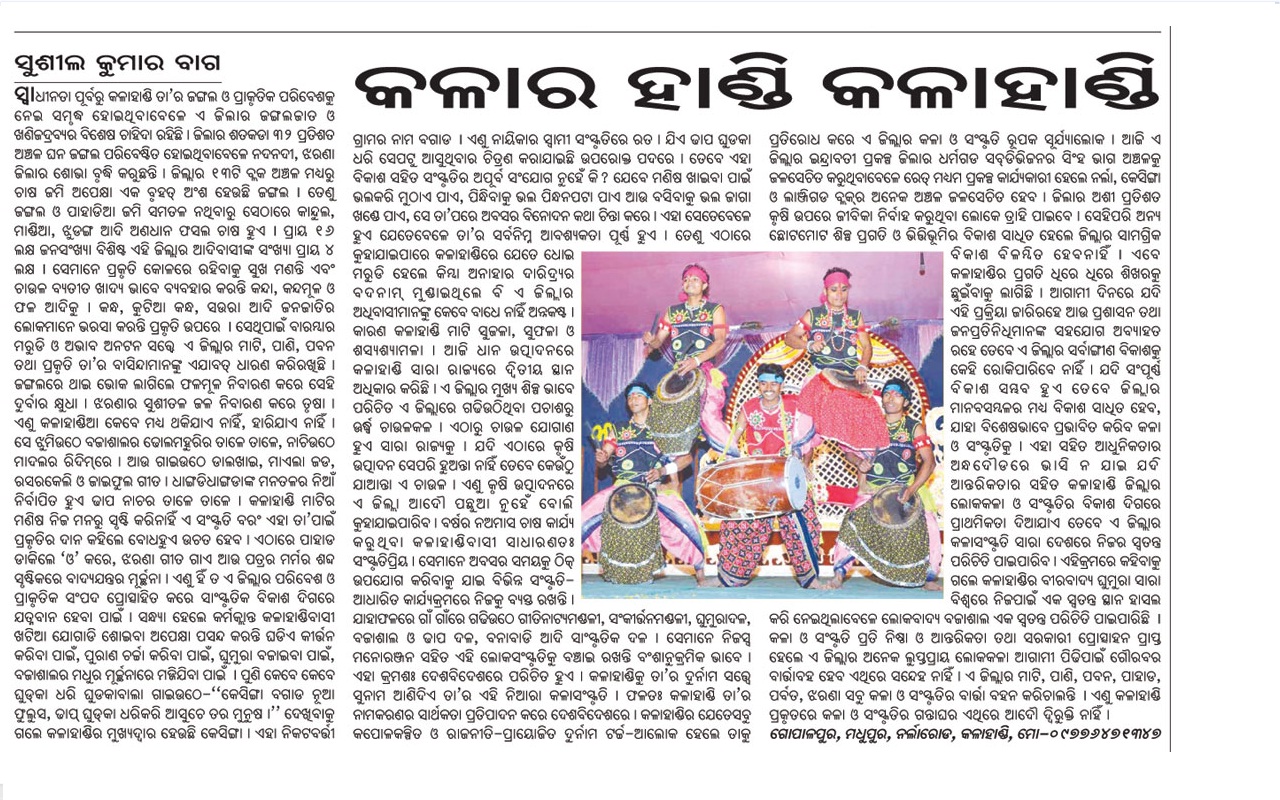
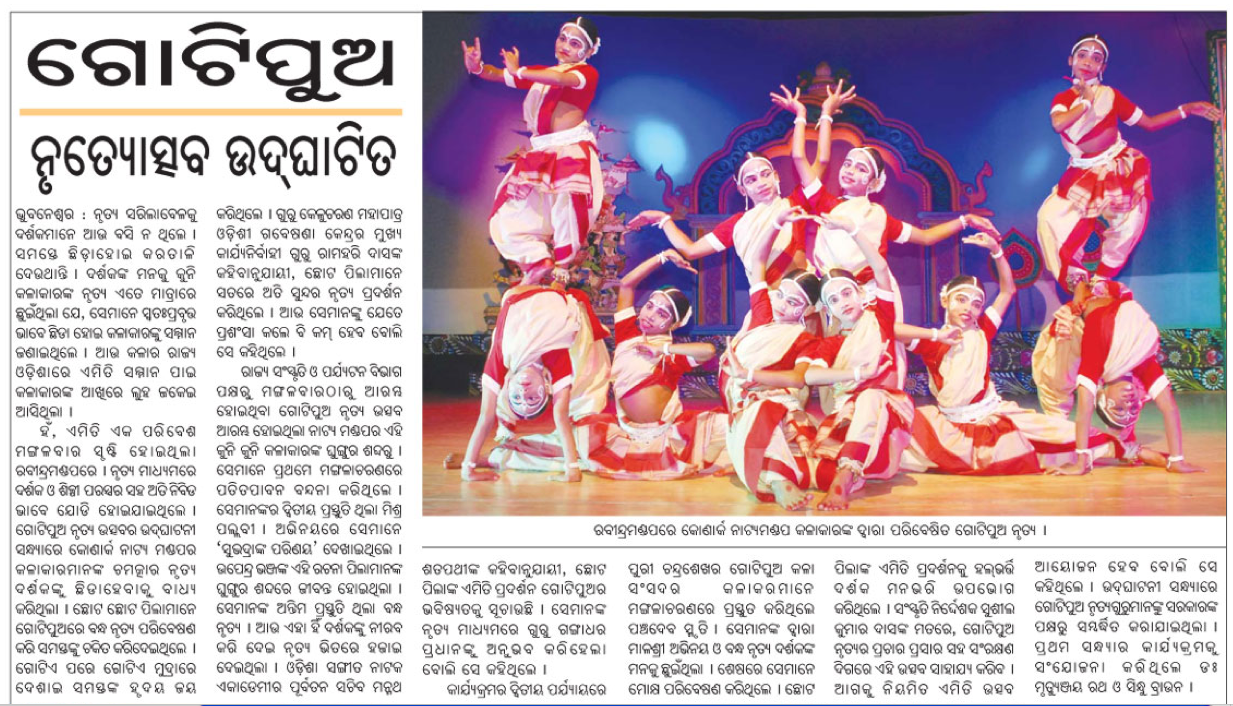
Almost without fail, at least one surprise every year has won us over. This time, Natya Chetana (from outside Bhubaneswar) did the trick with dramatist-director Subodh Pattanaik’s Mati in Oriya, though we might have expected it on the strength of their Katha in 2002. Among those few Indian troupes to live and work on a rural commune, Natya Chetana admirably pursues theatre for social development. Mati (both earth and mother) manages to connect all of India’s present woes, perhaps too causally, but nonetheless passionately. An American in top hat and stars-and-stripes (an unnecessarily simplistic demonization, the only flaw) sells hybrid seeds to farmers through politicians and middlemen; eventually yields suffer and the villagers are exploited, paving the way for Maoist intervention and violence. The grounds for the spread of insurrection are sympathetically delineated. The collective performs energetically (especially the main family, in the picture) and Pattanaik designs another trademark bamboo-and-cloth set, made exclusively of natural material.

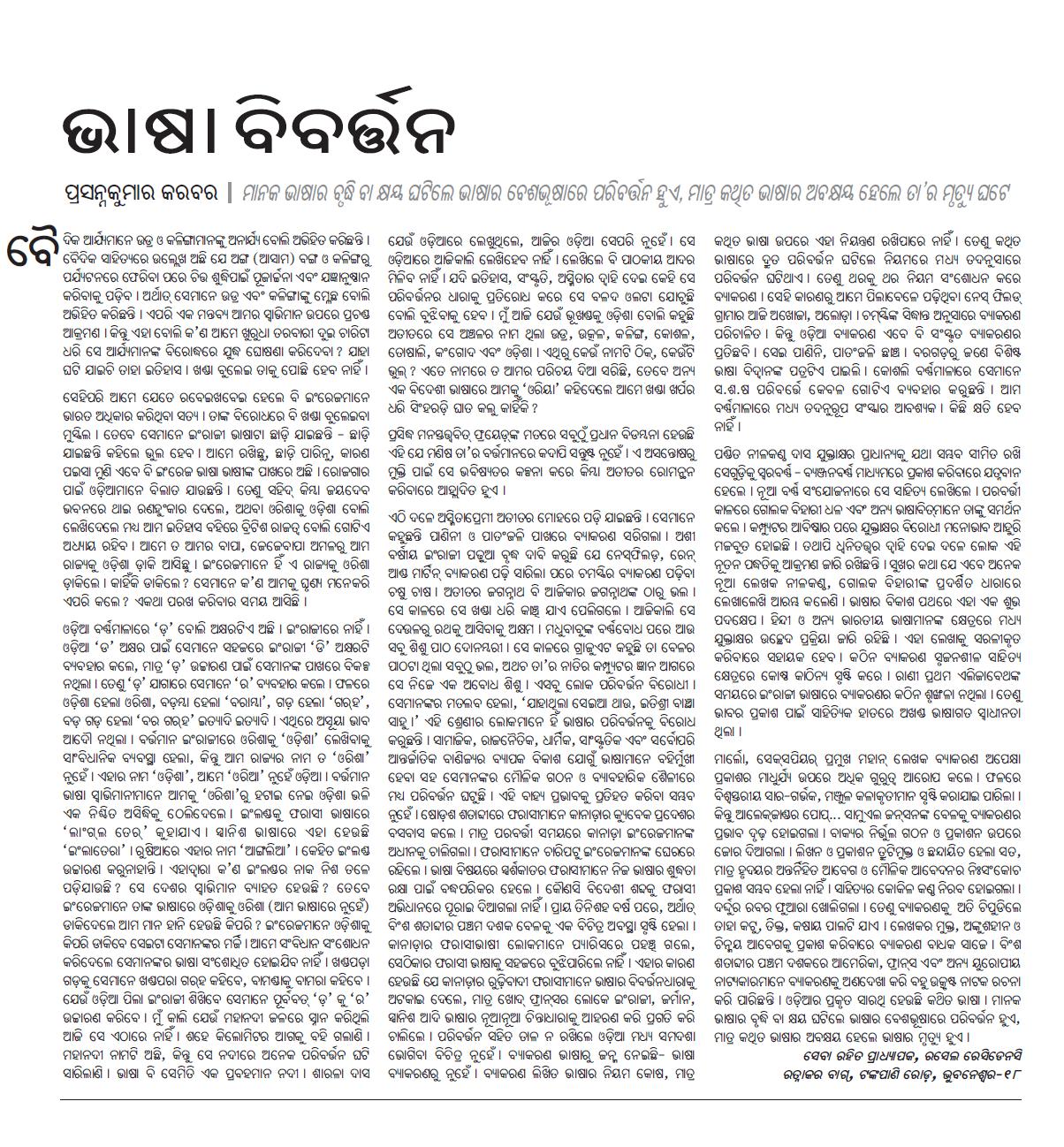
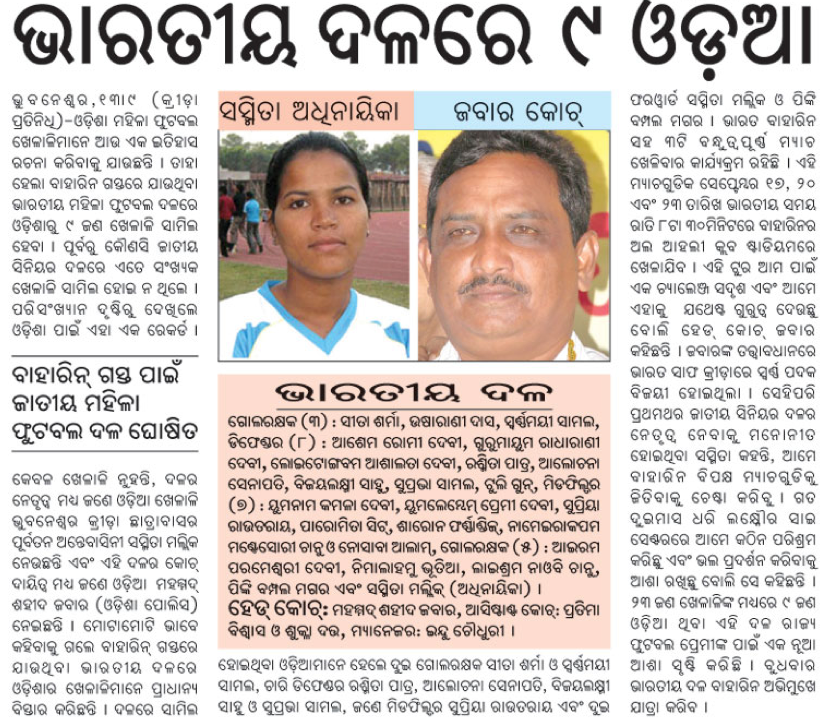
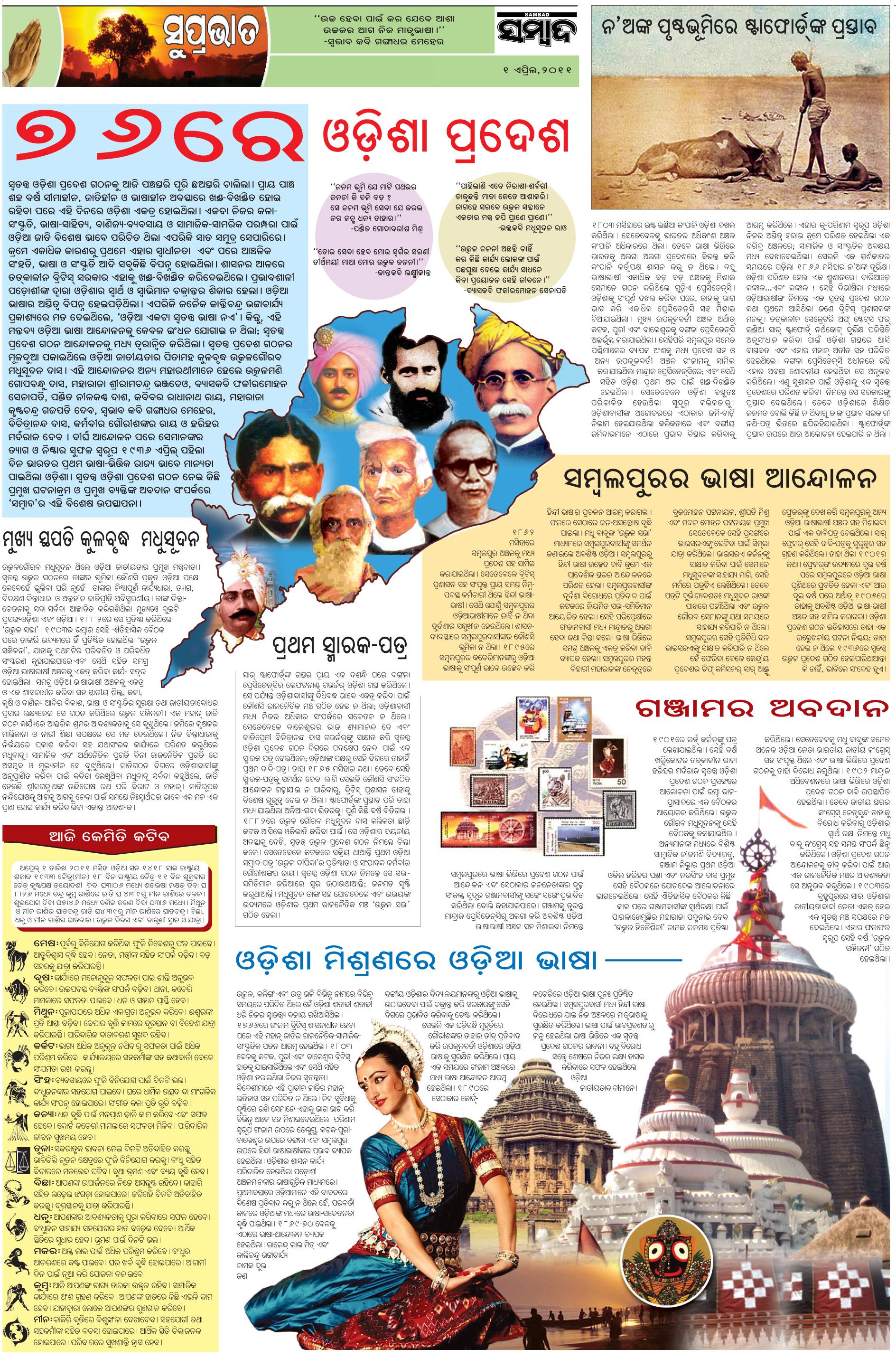
Sambada and Samaja are top news papers in Orissa

Samaja (in Oriya), Sambada (in Oriya), THINGS ORISSA N ORIYA 1 Comment »
Top Dailies: Indian Readership Survey 2008 — Round 2
Newspaper Language 2007 R2 2008 R2
The Times Of India Eng 134.8 133.4
Hindustan Times Eng 60.9 63.5
The Hindu Eng 52.5 52.8
The Telegraph Eng 30 29
Deccan Chronicle Eng 30 28
Dainik Jagran Hin 536.1 557.4
Dainik Bhaskar Hin 305.8 338.3
Amar Ujala Hin 282.2 293.8
Hindustan Hin 235.3 266.3
Rajasthan Patrika Hin 131.9 140.0
Asomiya Pratidin Ass 65.9 60.2
Dainik Agradoot Ass 39.8 32.8
Ananda Bazar Patrika Ben 157.5 153.9
Bartaman Ben 87.6 84.0
Gujarat Samachar Guj 84.7 87.4
Sandesh Guj 63.6 65.3
Vijay Karnataka Kan 99.4 92.2
Prajavani Kan 66.4 58.3
Malayala Manorama Mal 129.1 121.8
Mathrubhumi Mal 105.0 97.1
Lokmat Mar 206.6 199.3
Daily Sakal Mar 125.6 116.3
Sambad Ori 51.5 60.6
Samaj Ori 46.4 53.1
Ajit Pun 31.2 30.5
Jag Bani Pun 29.6 29.3
Daily Thanthi Tam 208.8 205.8
Dinakaran Tam 160.8 168.3
Eenadu Tel 142.2 144.1
Andhra Jyothi Tel 56.8 68.1
Inquilab Urd 8.3 8.1
Urdu Times Urd 6.2 4.6
(All figures are in lakhs)

The Oriya papers Sambada and Samaja have presence in the Internet. Samaja has a web-site with limited news and an e-paper site with the full paper. Sambada only has a web-site with limited news.

Fundraising for Jatin Das center of Arts In Bhubaneswar

Art Gallery, Arts n crafts, Bhubaneswar- Cuttack- Puri, Circuit: Bhubaneswar-Chilika-Puri, Khordha, Museums, Orissa artists, Sites in and around Bhubaneswar, Statesman, Telegraph No Comments »

Following is an excerpt from a news report in the Telegraph.

Painter Jatin Das’s dream of a museum for traditional and contemporary art in his native Orissa has gone international.

Das was in Washington and New York last week outlining his plans for the J.D. Centre of Art in Bhubaneswar to his American and Indian American fans.

At an interactive evening at the Indian embassy here, hosted by India’s deputy chief of mission Raminder Singh Jassal, with slides of his life’s work, Das said the proposed centre would be the first in India to display both traditional and contemporary art in 14 permanent galleries under one roof.

The Orissa government has allotted an acre of land to the painter, who was born in Mayurbhanj. B.V. Doshi, the famous architect from Ahmedabad and associate of Le Corbusier, has designed the master plan for the ambitious centre.

The painter said he had been dreaming of the project for almost a decade and expected that it would cost Rs 50 crore to make it a reality.

“I have been funding the centre, which has a board and a small staff of six people, with money from my paintings. They are temporarily working out of a house in Bhubaneswar given by the state government,” Das told this correspondent.

But he plans to make international requests for funding and hopes Indian Americans will join in the effort.

When the centre is ready, Das will donate his entire collection of 45 years, including paintings, books and antiquities, to the new venture to be housed in one place.

Indian Railways exploitation of backward and tribal areas of Orissa: confronting Railway Board Chair with the facts in Toronto

Balasore - Niligiri (defunct?), Baripada - Bangiriposi (under constr.), Closure notice once issued, ENVIRONMENT, EXPOSING ANTI-ORISSA-GROWTH SCHEMES, FINANCE & BANKING, Gajapati, Ganjam, Interstate disputes on Water and rivers, Jaroli - Deojhar .. Chaibasa, KBK Plus district cluster, Kandhamala, Keonjhar, Koraput - Rayagada, Mayurbhanj, Nayagarha, Orissa Consumer Welfare Foundation, Paradip - Jatadhari - Kujanga, Railway maps, Rajathagara - Nergundi, Rayagada, Samaja (in Oriya), Sambalpur, Sonepur, Sundergarh, Talcher - Barang, Titlagarh - Jharsugurha Jn, Tomka - Jaroli, Uncategorized 3 Comments »

Following is the news report on the discussion (almost a confrontation) with the Railway Board Chair, as reported in India Abroad. The basic premise behind our grievances against Indian Railways and our demands is simple.

  • Indian railways is scheduled to make 2500-3000 crores/year from Orissa, but spends only 1000 crores/year on Orissa in terms of new lines, doubling and gauge conversion.
  • Its current plan for major spending includes freight corridors, metro rails, and high speed rails, none of which touch Orissa. It plans to do gauge conversion of 12000 kms, most of which is unprofitable (this proves that Indian Railway lies when it says it only does profitable lines), very little (less than 100 km) of which is in Orissa.
  • Orissa is already behind the national average in terms of rail density and way behind its neighbors such as West Bengal and Bihar. If no changes are made to the 11th plan IR allocations Orissa will further fall behind.
  • Indian Railways must not take money from its profit in Orissa, and spend it else where, until it takes care of proper connectivity to Orissa’s tribal, backward and maoist infested areas. The 2500-3000 times 5 = 12,500 -15,000 crore that Indian Railways will profit from Orissa during the 11th plan must be spend in new lines in Orissa until the (i)-(v) lines below and other port and mine connectivity lines are completed during the 11th plan.
  • To Mr. Jena’s retort that Mumbai earns so much in taxes and not all of it is spent in Mumbai; we reply that it is often acceptable to take from rich and give to poor; But when did it become acceptable to take from poor (Orissa) and give to rich (freight corridors etc. in other states)?

The lines in Orissa connecting to the tribal and backward areas that we demand to be finished during the 11th plan are:

  • (i) Khurda Rd - Nayagarh - Balangir: Lack of connectivity was one of the reasons a recent Maoist mayhem happened in Nayagarh. It seems after recent events, including the confrontation with the Railway Board Chair and various dharanas in Bhubaneswar, IR has started responding to this demand, but not to the extent to promise its completion during the 11th plan. Note that Balangir is the B in the KBK districts that are the most backward in India.
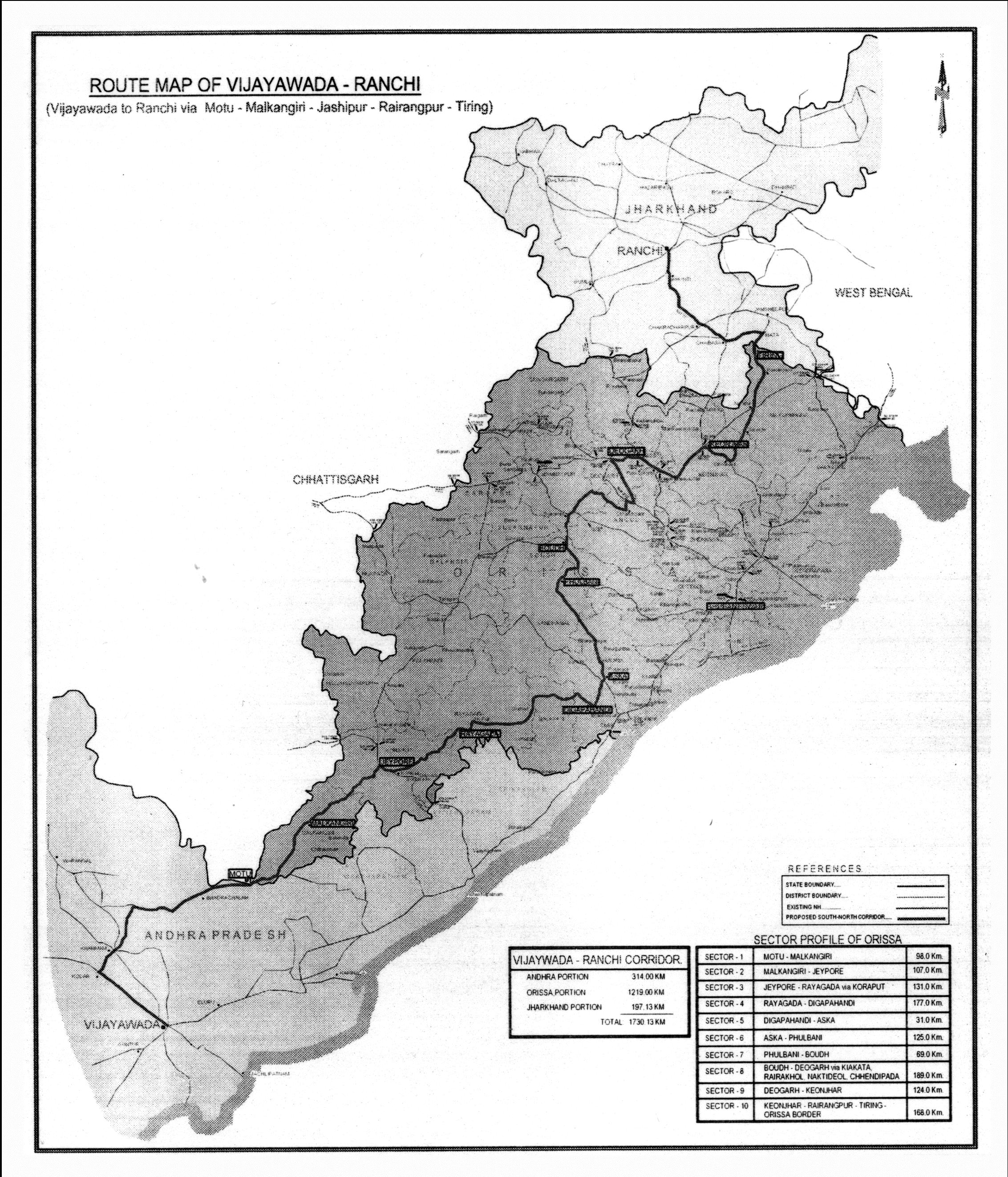
  • (ii) Lanjigarh Rd - Junagarh - Nabarangpur - Jeypore - Malkangiri - Bhadrachalam Rd in Andhra Pradesh: Only small part of this is approved. Most of it is not even surveyed. In the long run this will really bring those parts of Orissa closer to the rest of Orissa. This is the most important connection and has to be take care of at the earliest. Like the approved Vijaywada-Ranchi highway, this line will create an alternative Hyderabad - Ranchi path passing through backward and tribal areas of Andhra Pradesh, Orissa and Jharkhand. This line will connect the Kalahandi and Koraput districts, the two K’s in KBK. The recent Maoist attack and killing of the Greyhound forces in Malkangiri might have been prevented if this line existed as then the forces would have used the train rather than being seating ducks taking a boat across a lake in Malkangiri.
  • (iii a) Rayagada - Gopalpur: This has been surveyed and but work on it has not started. Note that Rayagada is part of the undivided Koraput district, one of the K’s of KBK. This line could come under port connectivity and will be a viable line connecting the industries near Rayagada with the upcoming port in Gopalpur.
  • (iii b) Gunupur - Theruvali: This will add to the Naupada-Gunupur line and make it an economically viable line. (IR and Mr. Jena agree about its importance.) This line will be completely inside the Raygada district, part of the undivided Koraput district, one of the K’s of KBK.
  • (iv) Talcher - Bimlagarh (connectivity to the tribal district of Sundergarh): This line has been approved but is only being given a few crores each year, which is less than the inflation. This line will reduce the distance between Sundergarh district and teh coastal areas significantly. For example, it will make Rourkela only 4-5 hrs from Bhubaneswar.
  • (v) Baripada/Buramara - Chakulia: This line will connect the tribal district of Mayurbhanj to tribal areas of Jharkhand. It will add to the Rupsa-Baripada-Bangiriposi line and make it an economically viable line. (IR and Mr. Jena agree about its importance.)

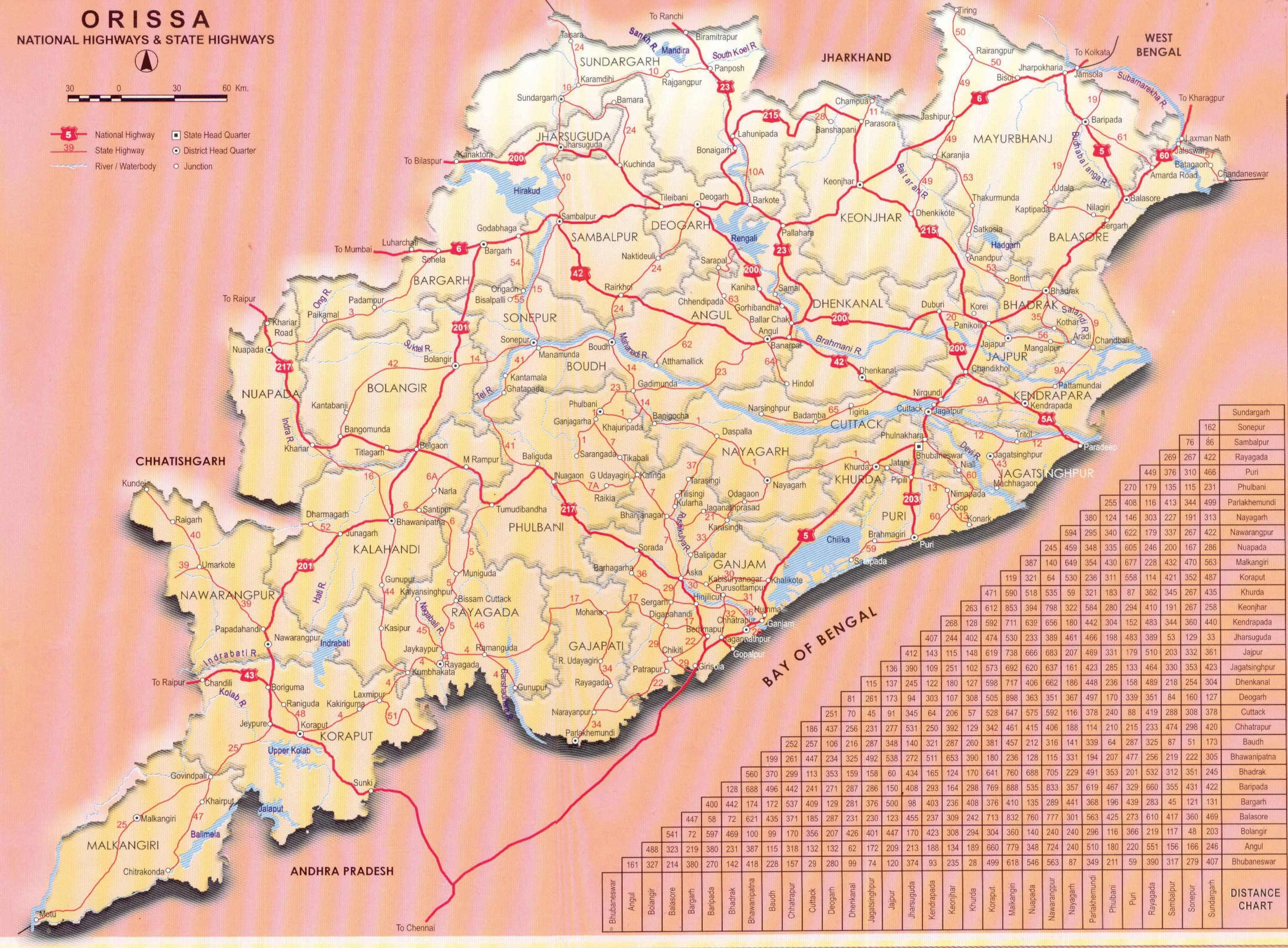
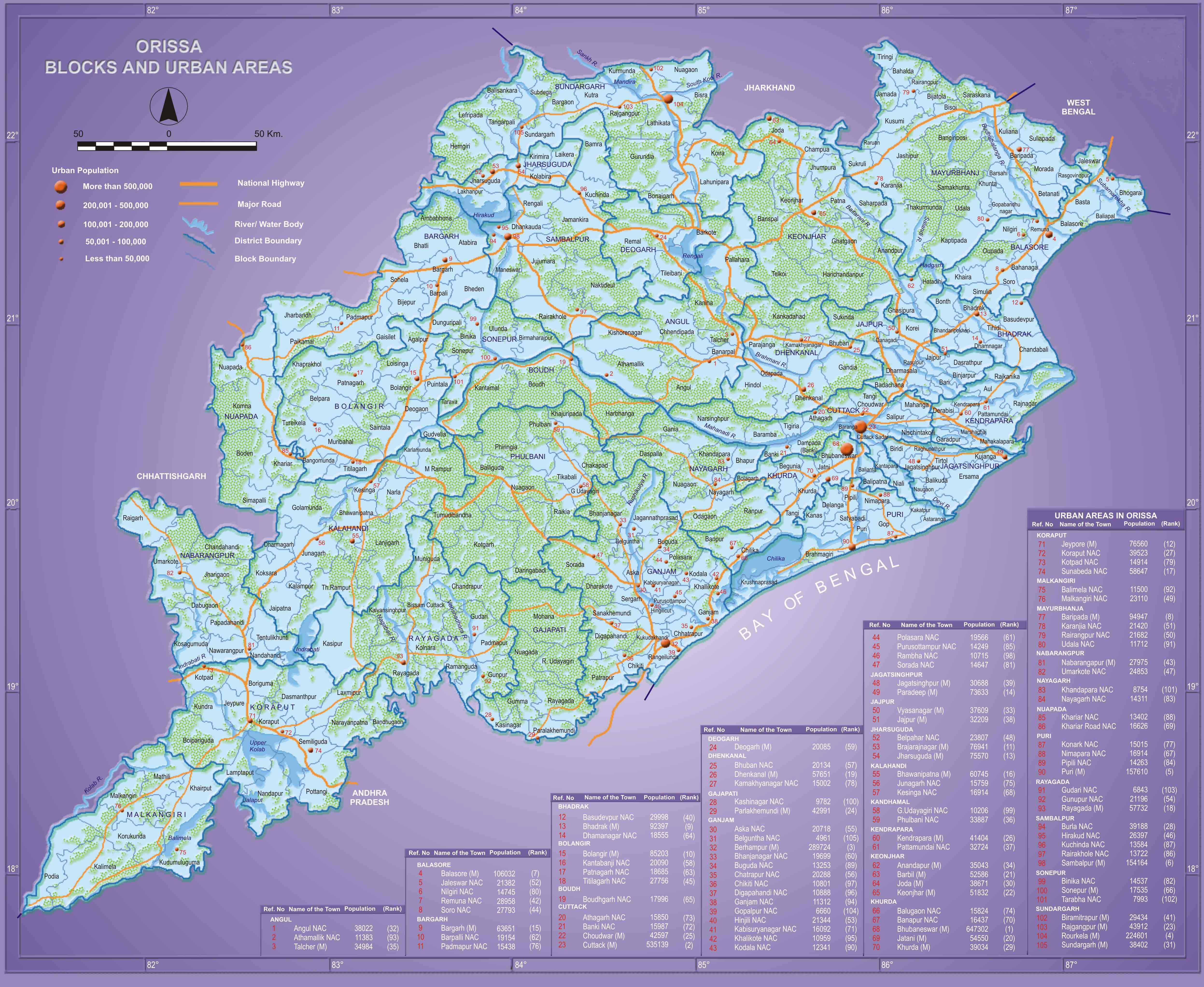
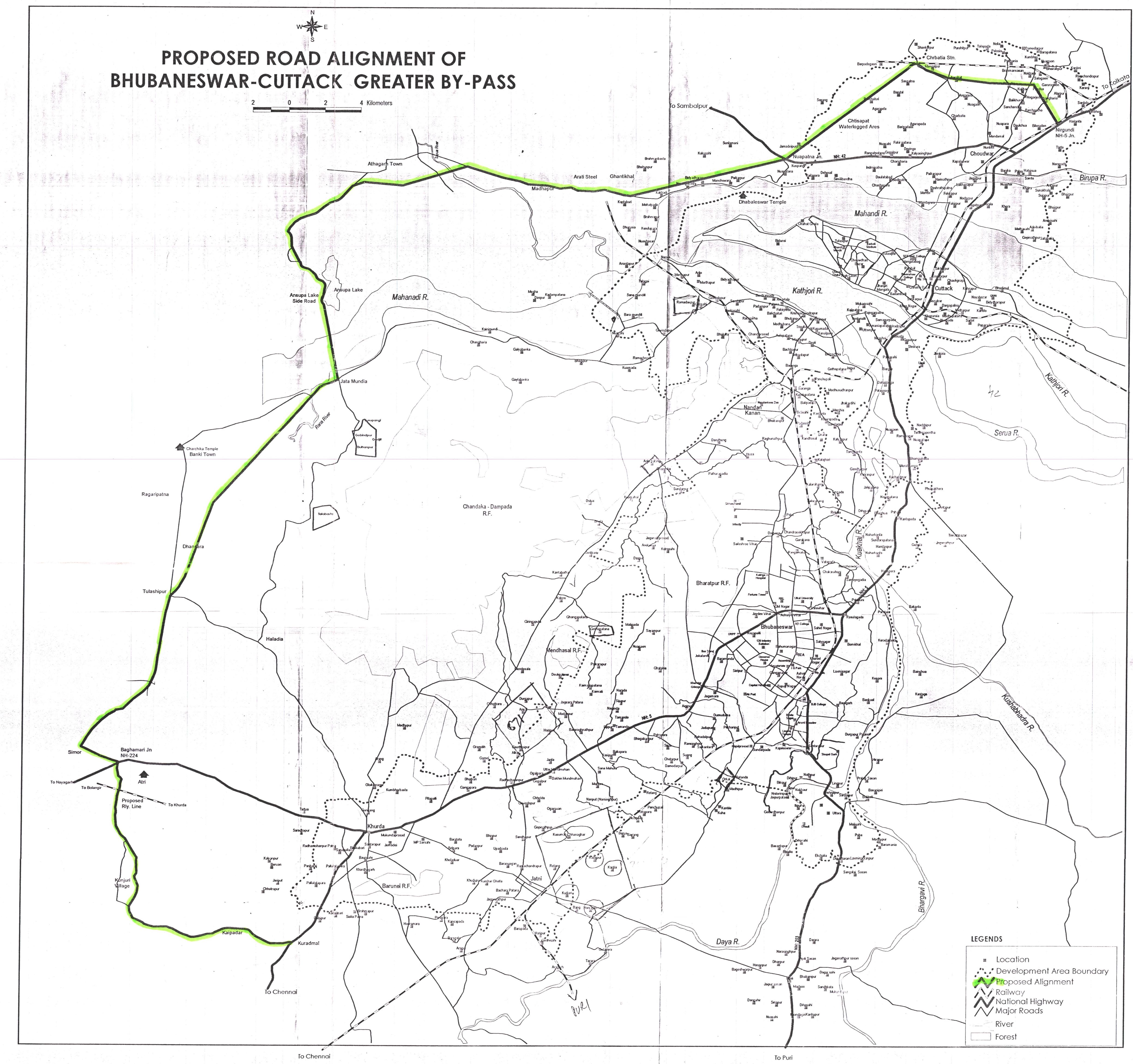
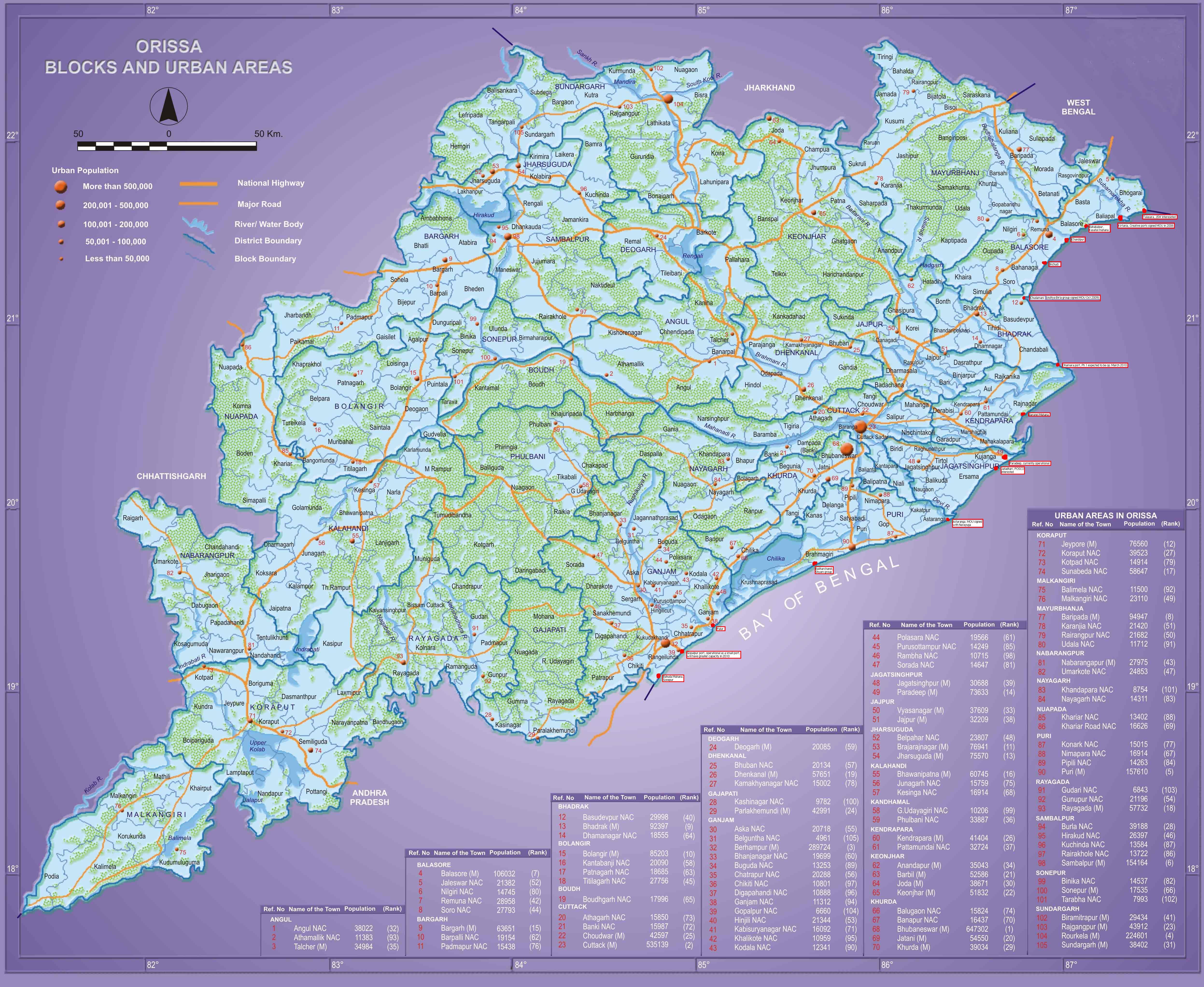
All these lines can be completed if Indian railways just suspends its practice of taking from poor (Orissa) and giving to the rich for only a few years (may be just 3-4 years). The following maps show the above mentioned lines.

A new 24-hour Oriya news channel

TV Stations 1 Comment »

Following is from a report in exchange4media.

Orissa is set to get a new 24-hour news channel soon. Naxatra News channel, promoted by Prabhat Ranjan Mallick who has several business interests in Orissa, is scheduled to go on air from July 4. This is Mallick’s first venture in the media space. The channel, which is headquartered in Bhubaneshwar, has already got its license from the I&B Ministry.

Naxatra News will air local, national and international news, with the focus being more on local news. The channel has tied up with Associated Press Television News (APTN) for its news content. Apart from news, there would be various infotainment-based programmes as well as talk shows and panel discussions on current issues.

Naxatra plans to set up a bureau in Delhi shortly and also has plans of opening bureaus in Kolkata, Mumbai and Bangalore in the near future. It has tied up with Lamhas, Mumbai, for teleport purpose.

Ashok Mohapatra has been appointed as Editor-in-Chief of Naxatra News. Mohapatra has had 16 years’ experience in print media and has worked with Sambad, the leading Oriya daily.

Currently, there are two Oriya channels operating in the state – OTV and ETV. Both are general entertainment channels.

The art and craft of Sambalpuri Sarees and their designs: Samaja

Arts n crafts, Bargarh, Handicrafts, Rural artisan villages, Sambalpur, Sambalpuri Sarees No Comments »


An international standard Cricket stadium coming up in Bhubaneswar

Bhubaneswar- Cuttack- Puri, Cricket, Cricket stadium, Khordha 1 Comment »

Following is an excerpt from a report in odishatoday.com.

"I have already talked with BCCI president Sharad Pawar requesting him to release funds for the infrastructure development of the Railway Cricket Stadium here in Orissa ," Railway Board Chairman and BCCI member Kalyan Coomar Jena said after inaugurating the Stadium here on Monday.

With inauguration of the Stadium, OCA and other cricket bodies could now host Ranji Trophy and other domestic cricket matches in the stadium. And after the expansion work got over, the Stadium could be a venue for the One-Day Internationals.

Railway sources said that the gallery would be made on lines of gallery that are being available in New Zealand.

"We have planned to make the Stadium as world class and facilities would be available on standards of other International venues," Jena, who is one among the policy maker of BCCI, said.

"I also discussed the matter with BCCI Treasure N Srinivasan and I hope, the country’s apex cricket body would release funds under its infrastructure development sachems, he added.

The Stadium is spread over 25 acres of land near here at Railway Workshop having a cricket ground with a boundary of 81 meters radius.

The Railway officials claimed that it would the biggest ever cricket ground in the world. The out field of the ground is planted with baramunda grass. In the first phase, Railway had released Rs 1.5 crore and in the second phase, the Ministry has sanctioned Rs 3 crore for the expansion of the Railway Stadium.

Meanwhile, OCA has announced to release a sum of Rs 1 crore in the initial phase, which will be spent on infrastructure development.

Impact of watersheds: some real stories

Nuapada, Uncategorized, Watersheds No Comments »

Following is an excerpt from a report in Times of India.

Till recently, most families migrated to other areas to make a living. This went on till the villagers learnt how to conserve rainwater through watershed development.

Usually, the rainwater would drain off or simply dry up. Now, the community along with the Orissa government and NGOs has started watershed programmes to conserve water in wells, man-made ponds and bunds. The state government has set up a Watershed Development Mission — the first of its kind in India — to take up livelihood and community development programmes.

At the village level, watershed committees implement the programmes. The good thing is, women too have come to the forefront as agents of change. They have formed self-help groups (SHG) to supplement their income.

Malati Sabar’s is one such family in Suklimundi village, Nuapada. They used to migrate to brick kilns in Andhra Pradesh every year. Now, Malati collects mahua flowers to supplement her income while her husband, a small farmer, grows an annual paddy crop on their two-acre plot. Malati has also become a member of an SHG that retails kerosene. Recently, she took a loan from the SHG to buy a goat. "My life has changed ever since the watershed programme was introduced here," says Malati.

In western Orissa, the watershed programme is being jointly implemented by the government and Department for International Development (DFID) of the UK government under the Western Orissa Rural Livelihood Project (WORLP). "We are following a ‘watershed plus’ approach. The aim is to give people more livelihood options besides agriculture," says Sarat Behra, project director, Watershed Commission, Nuapada.Villagers say they are earning more from the same field and it’s regular income too. Moreover, they now have the option of both farm and non-farm activities in their villages. This has curtailed the seasonal distress migration.

Tunu Sabar of Larki village was one such migrant who would go to Andhra Pradesh during the lean season. "Hardly any work was available here. We couldn’t irrigate our fields or grow crops. Most of us went to Hyderabad, Bhuban-eshwar, even Surat to work in brick kilns or as labourers," he says. Life at the brick kilns was tough. Each family got Rs 5,000 as advance from the sardar along with a weekly food allowance. In the end, the sardar took his cut and the migrant was left with almost nothing. But now life’s looking up. Tunu now grows paddy, onions, vegetables, sunflowers etc, on his two-acre patch. He has built a low-cost onion storage area and his kaccha house has been replaced by a pucca one. He has a motorbike and even a telephone.

Similarly, Jamuna Sabar, a widow from Malpada village, used to work as a coolie during the lean months while her son went to Surat as a labourer. Now, they have dug a pond that helps them grow paddy and vegetables. "We plan to diversify our crops and start pisciculture too," says Jamuna.

Common cause

Watershed development is not just about livelihood but also capacity building. Awareness levels among villagers have gone up and community mobilisation is more easy. Ambahal village in Baragarh is a good example. Here, the watershed development community got together to shut the liquor shop so that the village could get aid from NGOs. "We realised we couldn’t get money unless everyone got together. So we shut the liquor shop. Now we are working to spread education, build roads, control malaria etc," says Kamilini Patnaik, chairperson, watershed development committee. Moreover, the community makes sure the development work touches the poorest first and then trickles up. The central government is now planning to replicate this success story in other states as well.

Worries about the future of ODiya language: op-ed in Samaja

Oriya language resources No Comments »


Badi making in Keonjhar district

Cottage industry and Handlooms, Food processing, Keonjhar, Oriya/Orissa cuisine No Comments »

Following is an excerpt from a report in Thaiindian.

Around 850 families in Orissa’s Keonjhar District alone earn their livelihood from Badi making. Traditionally, the Badis have been prepared by grinding the Udad pulse (split black gram Dal) on a sil-stone. But to produce it for commercial purposes, today machines are used to grind the pulse for the Badi paste.

Today, the Badis prepared in Keonjhar District gaining popularity all over the country and in different parts of the world.

“We are supplying Badis to foreign countries too. The women in the old town of Keonjhar prepare these Badis. These Badis are made of Udad Dal (split black gram Dal) and various types of spices are mixed in it,” says shopkeeper Pradumna Patnaik.

Most of the Badis are marketed by Orissa Rural Marketing Services (ORMS) which also facilitates getting advance from banks to the women entreprenuers.

“Every house of Keonjhar district is preparing Badis. It is a part of their culture. For a few years, the people of Keonjhar are commercially preparing the Badis and they are also making it and it helps in their livelihood and promotional activities,” said Anant Charan Sahoo, the Chief Executive of, ORMAS in Keonjhar.

“We are also giving them training to value addition of making Badis in Keonjhar District. More than 200 groups are now engaged in Badi activities. Some parts of Keonjhar like Ghatna, Harichandanpur and Sadar block, the groups are engaged in this activity and they are even getting more money out of that Badi activity,” he added.

Many varieties Badis that are prepared by mixing Udad dal, pumpkin, almond, cauliflower and various other items and condiments. Badi added to enhance the taste of dishes.

“The Badis are very famous in Keonjhar. Badi is such a food item that tastes very good when it is fried with onion and garlic and being eaten with even overnight cooked rice. It also tastes good if it is made with vegetables. The Badis are also used in the marriages and fasts. The food doesn’t taste well without Badis. It is such a food item which can be eaten with rice even by roasting it in fire,” said Harekrishna Patnaik, a buyer.

Female palla singers of Orissa: Samaja

Palla and Daskathia, Samaja (in Oriya) No Comments »


Exhibition of artists in Orissa at the MonArt Gallery Kolkata

Art Gallery, Orissa artists, THINGS ORISSA N ORIYA 1 Comment »

Some of the art can be seen in the pages: [8],[9],[10],[11] and [12].

Following is what a Telegraph report says about them.

The exhibition of artists from Orissa titled Dimensions & Directions that has opened at Mon Art Gallerie is a refreshing change from the cliched works displayed over and over again at most city galleries nowadays.

To begin with, these young artists have a more heightened awareness of the political situation in the state and also of the degradation of environment as the direct fallout of some political decisions. Some of the works may seem a trifle crude but nobody can doubt their effectiveness despite that shortcoming.

In Debarchan Rout’s canvas a man on a scaffolding is painting a wall green, while ironically greenery has been erased from the terrain beneath him in the name of development. The world map has turned into a black umbrella stopping acid rain from destroying a sapling in Rajiblochan Pani’s canvas.

Traders would once set out from Bali from the Orissa coast, but now the rivers have turned dry and sand is carted away from it. Huge factories come up in background. The entire scene in this work by Sovan Kumar is painted on a piece of tarpaulin.

Birendra Pani once again focuses on the young cross-dressing dancers of Orissa, this time folk style. In Rohit Supakar’s painting, a brand new car emerges from the trunk of an anthropomorphic tree, in an obvious reference to the resistance put up by local people against forcible appropriation of farmland by the government.

In Ramakrishna Behera’s wide-angle paintings of Ladakh, the dividing line between fact and fancy melt away. It must be mentioned that however well intentioned the installation on Ridley turtles may have been it ended up looking too obvious.


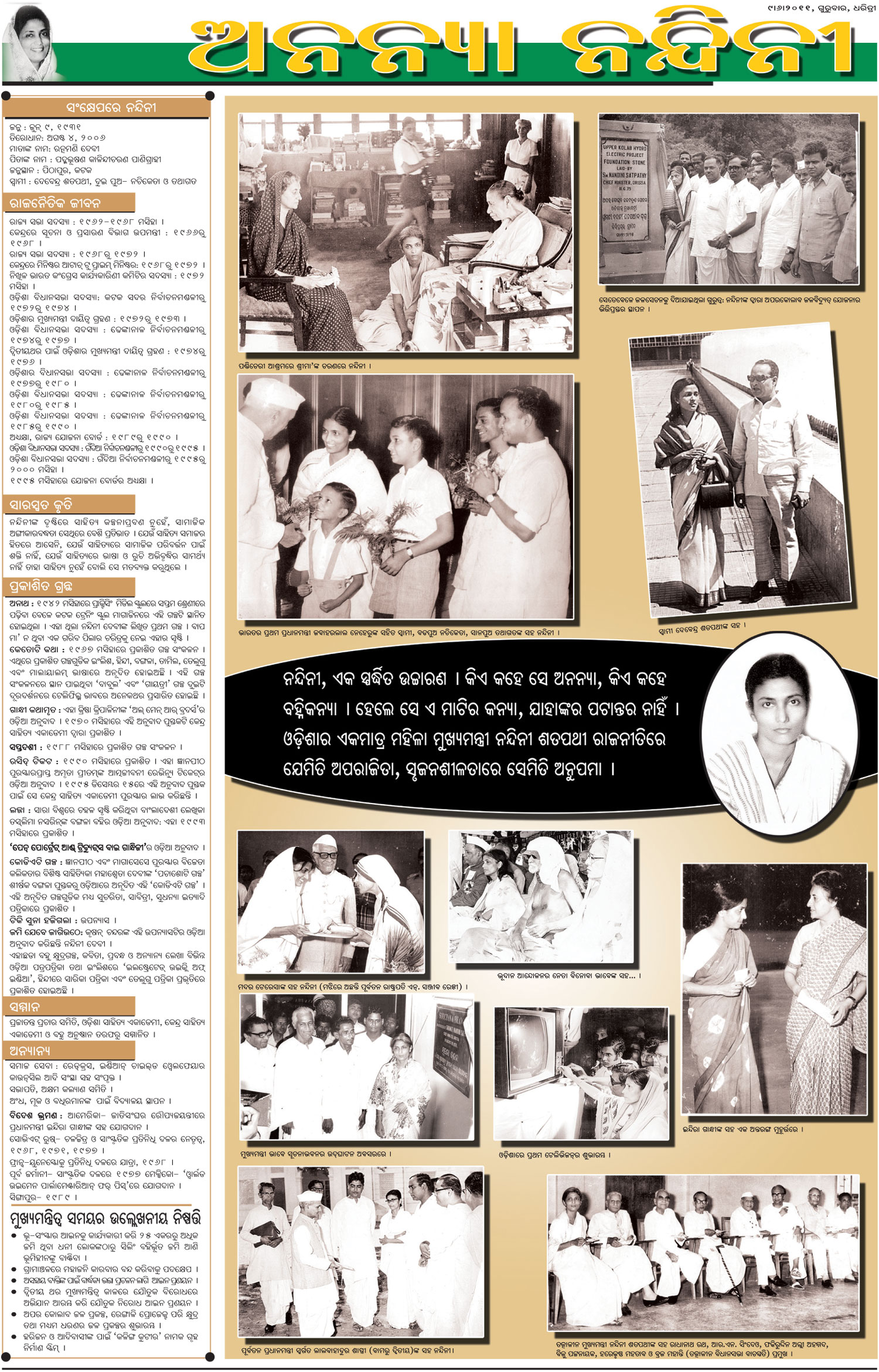
Samaja op-ed on Biswanath Das

Orissa personalities, Samaja (in Oriya) No Comments »


Samaja op-ed on Biju Patnaik on his anniversary

Orissa personalities No Comments »


Orissa in the 2008-09 Railway budget

Uncategorized 1 Comment »

Besides the new trains, extensions and increase in frequency, Orissa comes up in the Railway budget in the following places: (Note: The 2007-2008 budget with its pink book is also available.)

  • On new lines the allocations to Orissa (all in ECOR) are (Total 164.43 crores) - from the Pink Book
    • Koraput-Rayagada - 5 crores
    • Talcher - Sambalpur - 2 crores
    • Lanjigarh Rd - Junagarh - 35 crores (57 crore more needed to finish)
    • Khurda Rd - Balangir - 32.43 crores (580 crores more to finish)
    • Haridaspur-Paradip - 80 crores via RVN (401 crores more to finish)
    • Talcher - Bimlagarh - 10 crores (847 crores more to finish)
  • New Lines (Total 80 crores) - from the orange book
    • Daitari-Bansapani - 20 crores (69.2 crores more to finish) - ECOR
    • Angul - Sukinda Rd - 60 crores (251.12 crores more to finish) - ECOR
  • On gauge conversion (Total 50.41) - from the Pink Book
    • Naupada- Gunupur - 10.41 crores (14.7 crores more to finish) - ECOR
    • Rupsa - Bangiriposi - 40 crores (11.1 crores more to finish) - SER
  • Doubling (Total 288.25 crores) - from the Pink Book
    • Talcher-Cuttack-Paradeep (2nd bridge on Birupa and Mahanadi) - 3.25 crores (1.75 crores more to finish) - ECOR
    • Cuttack-Barang (12km) - 35 crores (51 crores more needed to finish) - ECOR
    • Khurda Barang 3rd line (35 km) - 125 crores (14.43 crores more  to finish) - ECOR
    • Rajathagarh-Barang (20 km) -  125 crores (18.33 crores more to finish) - ECOR
  • Doubling (total  350 crores ) - from the orange book
    • Titlagarh-Lanjigarh Rd - 7 crores (29 lakhs more to finish) - ECOR
    • Khurda Rd - Puri Phase 1 - 2 crores (2.79 crores more to finish)-ECOR
    • Sambalpur - Rengali - 2 crores (8.76 crores more needed)-ECOR
    • Jharsugurha - Rengali - 45 crores (26.41 crores more needed)-ECOR
    • Sambalpur - Titlagarh - 65 crores (399.25 crores needed)-ECOR
    • Raipur - Titlagarh - 65 crores (548.35 crores needed)-ECOR
    • Padapahar-Bansapani - 70 crores (26.58 crores needed) - SER
    • Barbil - Barjamada - 40 crores (5 crores needed) - SER
    • Bimlagarh - Dumitra - 50 crores (23.52 crores needed) - SER
    • Bansapani - Jaruli - 4 crores (72.22 crores needed) - SER

(Below, a slightly edited version of  a posting in IRFCA gives the difference between the Pink book, the Orange book and the green book used in earlier years.)

  • Green book lists the works sanctioned under SRSF(special railway safety fund). All these works are to be completed by 31.3.2008 .Therefore this year a green book was not published. Green book was prepared as a 5 yr plan in 2003 to renew overaged assets chargeable to the SRSF of Rs 17000 cr.
  • Orange book contains those works which are justified for enhancing the carrying capacity of Route (i.e., throughput enhancement work in railway terminology). It contains those gauge conversion, doubling & traffic facility works which are sanctioned for the enhancement of throughput. Railway gives higher priority to complete them.
  • Pink book is the main book of budget & contains all sanctioned (new as well as work in progress) works except those which are in the green or orange book.


Two new theatre halls planned for Bhubaneswar: Sambada

Bhubaneswar- Cuttack- Puri, Khordha, Orissa Culture, Orissa dances, Sambada (in Oriya), Theatre No Comments »


Orissa loan burden to cross 41,000 crores: Samaja

Loans, Orissa govt. action, Samaja (in Oriya), THINGS ORISSA N ORIYA No Comments »


Forest resource of Orissa

India map, Orissa forests, Overall Orissa, THINGS ORISSA N ORIYA, Websites of Interest No Comments »

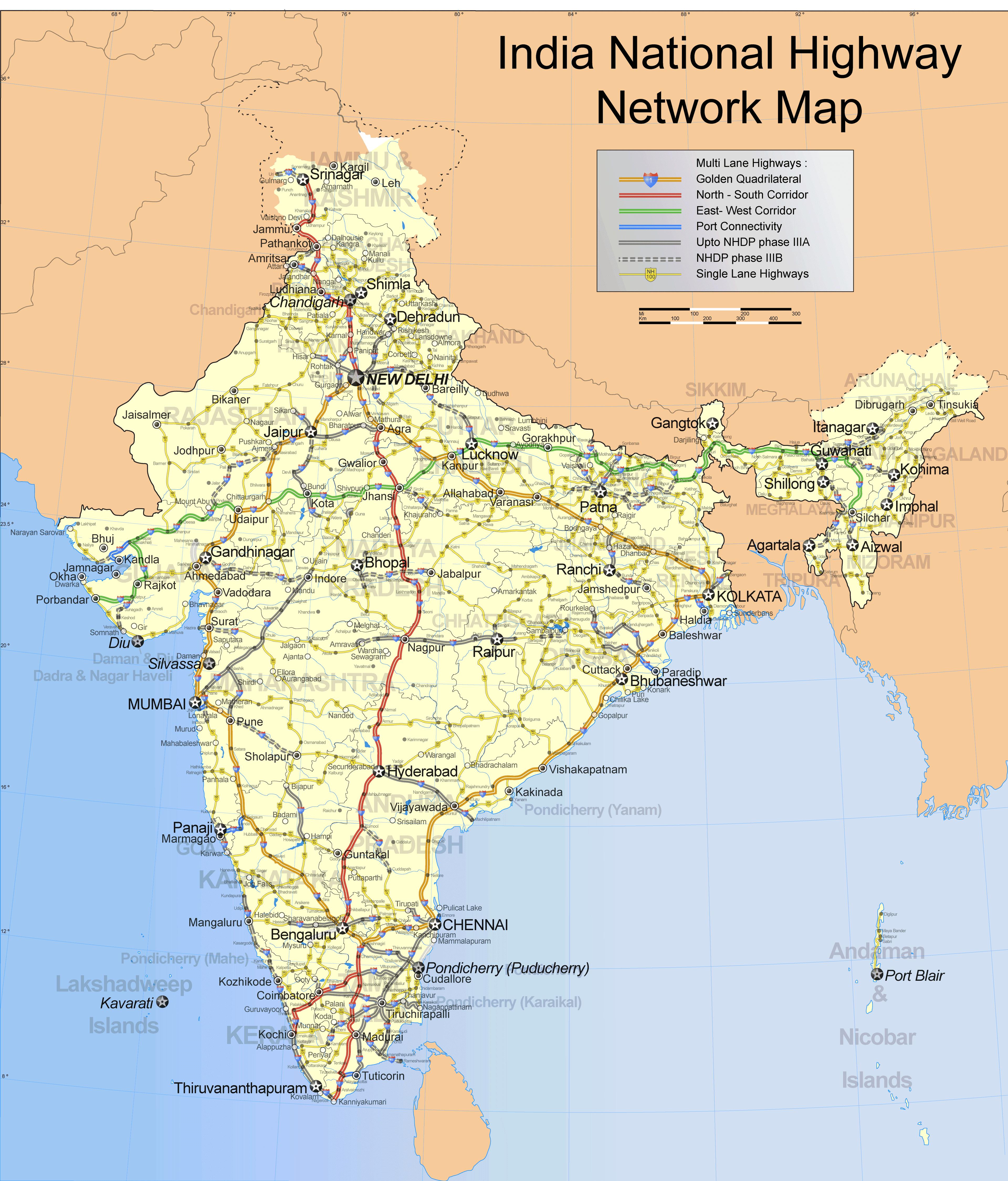
The following is from http://envfor.nic.in/fsi/sfr99/sfr.html. The maps below are also copied from there. Both talk about the status in 1999. More info on Orissa forests is at http://www.orissafdc.com/.

India:

The recorded forest area of the country, as reported by the state forest departments, is 76.52 million ha which constitutes 23.28 per cent of the total geographical area of the country.

Orissa:

The recorded forest area is 5.72 million ha, which constitutes 36.73% of the geographic area of the state. The forests are uniformly distributed in the state except in coastal districts where they are scarce. By legal status, the Reserved Forest constitutes 47.37%, Protected Forest 52.60% and Unclassed Forest 0.03%. About 0.503 million ha, constituting 8.8% of total forest area, is affected by shifting cultivation.    

There are four forest types namely Tropical Semi Evergreen, Tropical Moist Deciduous, Tropical Dry Deciduous, and Littoral and Swamp Forests.


Orissa’s slow economic progress: Samaja op-ed

THINGS ORISSA N ORIYA No Comments »


Excavation at Sishupalgarh

Bhubaneswar- Cuttack- Puri, Historical places, Khordha, Orissa history No Comments »

Update: Times of India also writes about it with headlines "2,500 years ago, a city bigger than Athens in Orissa" and "Lost city had all urban amenities." See also this Telegraph report.

Following is an excerpt from a report in Hindu.

Researchers involved in excavation at the ancient city of Sisupalgarh on the outskirts of Bhubaneswar have come across a number of artefacts and structures that throw light on the existence of a flourishing urban life during the pre-historic period.


The geophysical research showed large-scale patterns of subsurface architecture such as streets, which were visible linking the gateways in the interior of the site, and a large ancient perimeter area around the pillar zone, said R.K. Mohanty of the Pune-based Deccan College and Monica L. Smith of the University of California here on Thursday.

These researchers, with the help of students from different universities and the Archaeological Survey of India (ASI), began their work in 2000, about 50 years after the first excavation.

After several deep trenches, they have now exposed 18 previously unknown pillars and several associated structures on a mound within the fortification wall.

Sisupalgarh was absolutely visible through naked eyes as well as from the space and this could be one of its kinds of cultural heritage in the whole of eastern India, the researchers claimed.

“It seemed to be a large city, which could have been governed under one ruler. The ancient population inhabiting the place was estimated to be 25,000,” said Mr. Mohanty, an archaeologist.

“The civilisation could have lasted for more than 1,000 years between 3rd BC and 3rd AD,” he said.

Researchers worked on the place adjacent to a “majestic gate” excavated by Prof B.B. Lal in 1950. They found house foundations of laterite block architecture. The habitation areas also contained very large quantities of household pottery such as bowls and jars along with other household artefacts such as iron nails and terracotta ornaments including bangles, finger rings, pendants and ear spools.

Pointing out that the latest debris deposits and pillars indicated that it was meant for public use, Ms. Smith said the ancient artisans at Sisupalgarh were manufacturing potteries massively and those were in rapid use.

“It suggested that the people, animals and trash were closely integrated in the crowded space of the city. …

Anandpur, Keonjhar in Orissa history: Samaja op-ed

Keonjhar, Orissa history No Comments »


Radio Choklate on air in Rourkela?

Radio Stations, Rourkela- Kansbahal, Sundergarh No Comments »

Exchange4media reports that Radio Choklate is on air in Rourkela. Following is an excerpt from that report.

Radio Choklate, the radio initiative of Oriya daily ‘Sambad’ from Eastern Media Pvt Ltd, has gone on air in Rourkela recently. Monica Nayyar Patnaik, Director, Eastern Media Ltd, said, “We are quite well-known in Orissa, and we feel really proud to enter new markets here with our FM channel. Our objective is to make more cities of this state listen to Odisha’s Apna No. 1.”