Lemontree hotel to open in Bhubaneswar: Samaja
April 17th, 2008 | Chitta Baral | 1 Comment »
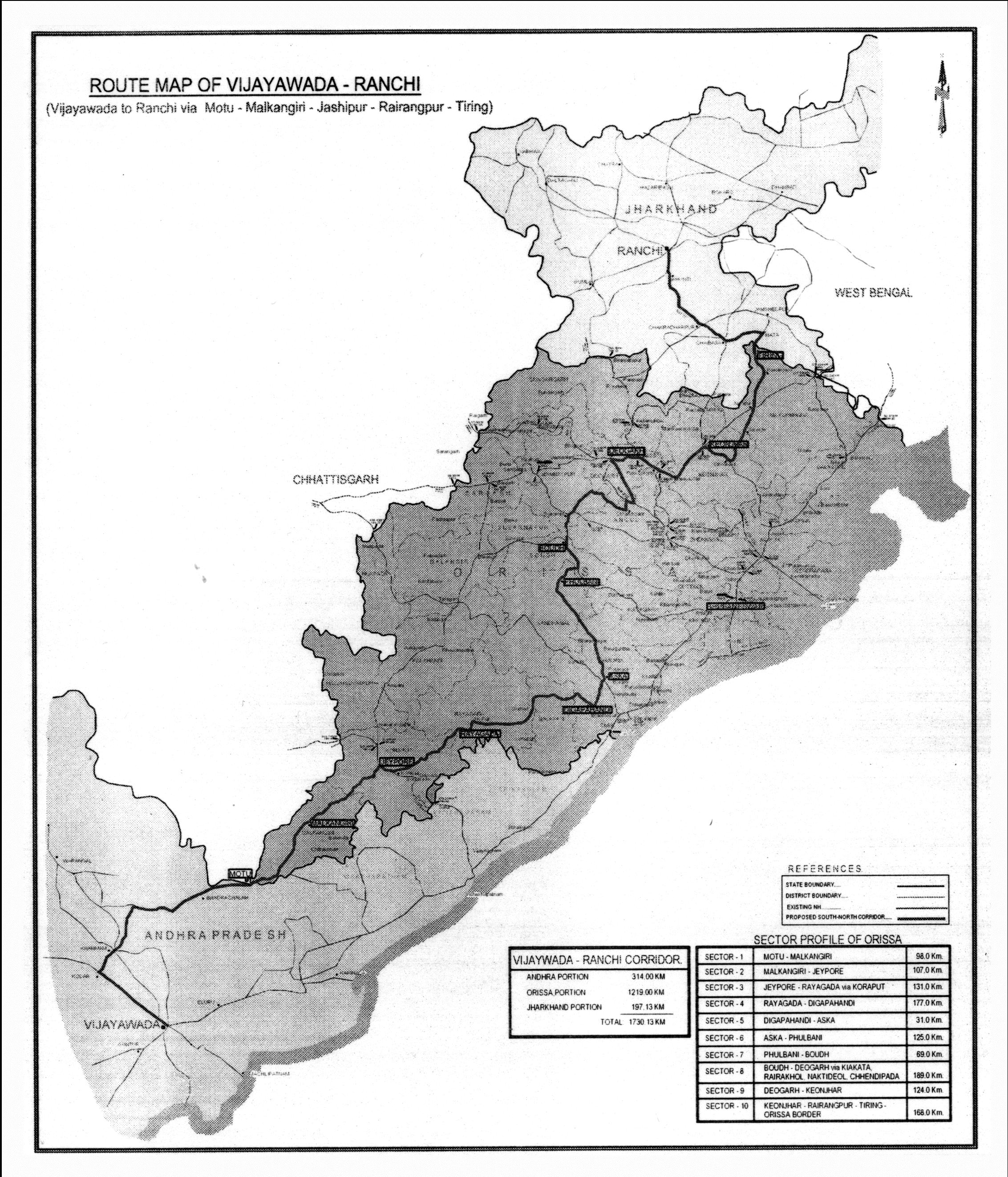
The list from the article below are: (See also this and this.)
Following is from http://pib.nic.in/release/release.asp?relid=37077.
The Cabinet Committee on Economic Affairs today gave its approval to the proposal to create Information Technology Investment Regions (ITIRs). These ITIRs would be endowed with excellent infrastructure and supported through investor-friendly policies. ITIRs were conceptualized keeping in view the need to boost the growth of both IT/ITES and Electronic Hardware Manufacturing (EHM) Units.
These regions would become major magnets for investment creating employment opportunities and economic growth in the area. Simultaneously, it will reduce the pressure on existing urban centers by enabling growth of new townships and dispersal of industry.
The regions would be a combination of IT/ITES and Electronics Hardware Manufacturing Units; Public uitilities, residential area, social infrastructure and administrative services. Such regions could include new integrated townships, SEZs, industrial parks etc. In the ITIR, there would be a clear delineation between the IT/ITES areas and Electronic Hardware Manufacturing areas. The ITIRs would generate direct and indirect employment during the construction and operational phases.
Each ITIR is expected to be a specificlly notified investment region with minimum area of 40 sq.kms. planned for IT/ITES and EHM Units. The minimum processing area will be 40% of the total area of the ITIR. The ITIRs will be developed in a phased manner.
The State Government would ensure that all physical infrastructure and utilities within its jurisdiction (power, water, roads, transportation, sewerage and effluent treatment facilities) are provided. The Central Government will facilitate development of National Highways, Airport and Rail links to the ITIRs.
The Public-Private Partnership (PPP) route is advocated for the development of ITIRs. State Government will select the developers/co-developers through a transparent process.
The following is from http://pib.nic.in/release/release.asp?relid=37272.
The Ministry of Housing & Urban Poverty Alleviation has approved 15 projects under the Integrated Housing and Slum Development Programme (IHSDP) and 5 projects under the Basic Services to the Urban Poor (BSUP) in Orissa so far. These projects have been approved by the Central Sanctioning and Monitoring Committee and Central Sanctioning Committee. The details of the projects approved under IHSDP are given below:
INTEGRATED HOUSING AND SLUM DEVELOPMENT PROGRAMME (IHSDP)
|
Sl. No. |
Details of Projects Approved
|
|
|
1. |
No. of Projects Approved |
15 |
|
2. |
Total Project Cost Approved (Rs in Crores) |
83.63 |
|
3. |
Total No. of new dwelling units approved for construction |
4884 |
|
4. |
Total No. dwelling units for upgradation |
0 |
|
5. |
Total number dwelling units Approved |
4884 |
|
6. |
Total Central Share Approved (Rs in Crores) |
59.13 |
|
7. |
|
24.50 |
|
8. |
1st installment (50% of Central Share approved) (Rs in Crores) |
29.57 |
|
9. |
Total Additional Central Assistance (ACA) released by M/o Finance (Rs in Crores) |
14.92 |
Under the IHSDP, 4884 new dwelling units have been approved for construction at the total project cost of Rs. 83.63 crore. Out of this, the Central share of Rs. 59.13 crore and State share of Rs. 24.50 crore have been approved. The Total Additional Central Assistance of Rs 14.92 crore has been released by Ministry of Finance.
The details of the projects approved under BSUP are given below:
BASIC SERVICES TO THE URBAN POOR (BSUP)
|
S.N. |
Details of Projects Approved
|
|
|
Total
|
|
1. |
Mission Cities |
Bhubanesh-war |
Puri |
2 |
|
2. |
Projects Approved |
3 |
2 |
5 |
|
3. |
Total Project Cost Approved (Rs in Crores) |
56.15 |
11.02 |
67.17 |
|
4. |
Total no. of new Dwelling Units Approved (In-situ) |
1716 |
355 |
2071 |
|
5. |
Total No. of DUs approved under (Relocation) |
0 |
0 |
0 |
|
6. |
Total No. of DUs approved for upgradation |
245 |
0 |
245 |
|
7. |
Total No. of DUs approved (In-situ + Relocation + Upgradation) |
1961 |
355 |
2316 |
|
8. |
Total Central Share Approved (Rs in Crores) |
40.75 |
8.02 |
48.77 |
|
9. |
|
15.39 |
3.01 |
18.40 |
|
10. |
1st Installment Sanctioned (25% of Central Share) (Rs in Crores) |
10.19 |
2.00 |
12.19 |
|
11. |
2nd installment sanctioned (Rs in Crores) |
0.00 |
0.00 |
0.00 |
|
12. |
Additional Central Assistance (ACA) for 1st installment released by M/o Finance (Rs in Crores) |
10.19 |
2.00 |
12.19 |
|
13. |
ACA for 2nd Installment released by M/o Finance (Rs in Crores) |
0.00 |
0.00 |
0.00 |
|
14. |
Total Additional Central Assistance Released by M/o Finance (Rs in Crores) |
10.19 |
2.00 |
12.19 |
Under the BSUP, the projects worth amounting to Rs. 67.17 crore have been approved to construct 2316 dwelling units in the two mission cities in the State. The Central share of Rs. 48.77 crore and State share of Rs. 18.40 crore have been approved. The total Additional Central Assistance of Rs. 12.19 crore has also been released by the Ministry of Finance .
The Integrated Housing & Slum Development Programme was launched by the Prime Minister in December 2005 with a view to ameliorate the conditions of the urban slum dwellers who are residing in dilapidated conditions. The existing Valmiki Ambedkar Awas Yojana (VAMBAY) and the discontinued National Slum Development Programme (NSDP) are subsumed in the IHSDP, to strive for holistic slum development with a healthy and enabling urban environment by providing adequate shelter and basic infrastructure facilities to the urban slum dwellers. The programme covers all the towns except the 63 mission towns/cities covered under the Basic Services for the Urban Poor (BSUP) under Jawaharlal Nehru National Urban Renewal Mission (JNNURM).
The Basic Services to the Urban Poor (BSUP) was launched by the Prime Minister in December 2005 with a view to ameliorate the conditions of the urban slum dwellers who are residing in dilapidated conditions in the identified 63 mission cities. The basic objective of the scheme is to strive for holistic slum development with a healthy and enabling urban environment by providing adequate shelter and basic infrastructure facilities to the urban slum dwellers.
Following is from http://teamorissa.org/water.asp.
Water Resources: India & Orissa (Unit in BCM)
|
Description
|
India
|
Orissa
|
|
Annual Precipitation |
4000
|
230.76
|
|
Average Annual Water Resources |
1869
|
141.408*
|
|
Utilizable Water Resources (Surface & Ground) |
1122
|
108.147
|
|
Utilizable Resources (% of precipitation) |
28%
|
47%
|
* include trans-boundary flow
The State is blessed with an extensive network of rivers & streams. As per assessment made in 2001, the average annual availability of surface water resources is about 120.397 BCM. Out of the above, the yield from its own drainage boundary is 82.841 BCM and inflow from neighboring states through interstate rivers is 37.556 BCM. Considering the topography and geological limitations, 75% of the average annual flow can be utilized. Due to increasing demands for water for various uses, an attempt has been made to assess the availability of Water Resources by the year 2051. The assessment reveals that the surface water availability from its own drainage boundary remains more or less fixed but the inflow of surface water from neighboring states will be reduced from 37.556 BCM to 25.272 BCM. The following table shows the assessed inflow of surface water pertaining to the years 2001 and 2051.
Assessed Inflow of Surface Water Scenario: 2001
|
Basin Name
|
Average Annual flow (BCM)
|
75% dependable flow (BCM)
|
|||||||
|
Own
|
Outside State |
Total
|
Own
|
Outside State |
Total
|
||||
|
Mahanadi
|
29.90
|
29.255
|
59.155
|
25.508
|
23.225
|
48.732
|
|||
|
Brahmani
|
11.391
|
7.186
|
18.577
|
8.849
|
5.521
|
14.011
|
|||
|
Baitarani
|
7.568
|
–
|
7.568
|
5.434
|
–
|
5.434
|
|||
|
Rushikulya
|
3.949
|
–
|
3.949
|
2.782
|
–
|
2.782
|
|||
|
Vamsadhara
|
5.083
|
–
|
5.083
|
3.881
|
–
|
3.881
|
|||
|
Budhabalanga
|
3.111
|
–
|
3.111
|
2.521
|
–
|
2.521
|
|||
|
Kolab
|
11.089
|
–
|
11.089
|
8.885
|
–
|
8.885
|
|||
|
Indravati
|
6.265
|
–
|
6.265
|
4.451
|
–
|
4.451
|
|||
|
Bahuda
|
0.438
|
–
|
0.438
|
0.213
|
–
|
0.213
|
|||
|
Nagavali
|
2.853
|
–
|
2.853
|
2.322
|
–
|
2.322
|
|||
|
Subernarekha
|
1.193
|
1.115
|
2.308
|
1.193
|
1.115
|
2.308
|
|||
|
Total
|
82.841
|
37.556
|
120.397
|
65.679
|
29.861
|
95.540
|
|||
|
Basin Name
|
Average Annual flow (BCM)
|
75% dependable flow (BCM)
|
|||||||
|
Own
|
Outside State |
Total
|
Own
|
Outside State |
Total
|
||||
|
Mahanadi
|
29.90
|
21.039
|
50.939
|
25.508
|
16.702
|
42.210
|
|||
|
Brahmani
|
11.391
|
3.118
|
14.509
|
8.849
|
2.395
|
10.884
|
|||
|
Baitarani
|
7.568
|
–
|
7.568
|
5.434
|
–
|
5.434
|
|||
|
Rushikulya
|
3.949
|
–
|
3.949
|
2.782
|
–
|
2.782
|
|||
|
Vamsadhara
|
5.083
|
–
|
5.083
|
3.881
|
–
|
3.881
|
|||
|
Budhabalanga
|
3.111
|
–
|
3.111
|
2.521
|
–
|
2.521
|
|||
|
Kolab
|
11.089
|
–
|
11.089
|
8.885
|
–
|
8.885
|
|||
|
Indravati
|
6.265
|
–
|
6.265
|
4.451
|
–
|
4.451
|
|||
|
Bahuda
|
0.438
|
–
|
0.438
|
0.213
|
–
|
0.213
|
|||
|
Nagavali
|
2.853
|
–
|
2.853
|
2.322
|
–
|
2.322
|
|||
|
Subernarekha
|
1.193
|
1.115
|
2.308
|
1.193
|
1.115
|
2.308
|
|||
|
Total
|
82.841
|
25.272
|
108.113
|
65.679
|
20.212
|
85.891
|
|||
Ground Water Resources:
The natural recharge of ground water takes place through percolation from land after rain events. The quantum of dynamic ground water, which can be annually extracted, is generally reckoned as ground water potential. As per assessment made in 2001, the total annual replenishable ground water resource of the state is 21.011 BCM, out of which 60% i,e 12.607 BCM is safe and usable.
Per-capita Water Availability:
The
The per-capita water availability is reducing progressively owing to increase in population. In 2001, the average per-capita water availability (both surface and ground) in the state was around 3359 cubic meter (cum) per year, as compared to the national average of 1820 cum. With the projected future population the per-capita water availability in the state will reduce to 2218 cum in 2051. Per-capita water availability less than 1700 cum is termed water stress condition while if it falls below 1000 cum, it is termed as water scarce condition. Though per-capita availability of water resources in our state is relatively favorable in the aggregate, the Rushikulya basin will experience a scarcity condition and basins like Budhabalanga and Bahuda will be close to scarcity condition by 2051.
Water has always played an important role in providing livelihood, hygiene and environmental securities since the dawn of civilization. The demand pattern is changing rapidly with increase in population, urbanization and rapid industrialization. Keeping in view the constraints of water availability and the variety of its uses, water allocation issues need to be addressed in a wise manner. Considering this, the present and future requirement of water for all purposes have been assessed, which is given in the table below.
Water requirements for different uses ( Qty. in BCM)
|
Uses
|
Year-2001
|
Year-2051
|
|||||||
|
Surface
|
Ground
|
Total
|
Surface
|
Ground
|
Total
|
||||
|
Domestic
|
0.798
|
1.198
|
1.996
|
1.202
|
1.803
|
3.006
|
|||
|
Agriculture
|
18.00
|
4.688
|
22.688
|
40.00
|
9.408
|
49.408
|
|||
|
Industry
|
0.606
|
0.100
|
0.706
|
1.750
|
0.20
|
1.950
|
|||
|
Environment
|
21.00
|
8.40
|
29.40
|
21.00
|
8.40
|
29.40
|
|||
|
Others
|
0.10
|
0.10
|
0.200
|
0.20
|
0.20
|
0.40
|
|||
|
Total
|
40.504
|
14.486
|
54.99
|
64.152
|
20.01
|
84.463
|
|||
Water Storage:
A storage capacity of 17.00 BCM has so far been developed through completed major, medium and minor(flow) projects. Besides, the projects under construction will contribute to an additional 1.47 BCM. The details are given in the following table.
Reservoir Storage Status as on 31.03.2007 ( Qty. in BCM)
|
Category
|
Completed Projects
|
Ongoing Projects |
||||
|
No
|
Capacity
|
No
|
Capacity
|
|||
|
Major
|
7
|
14.86
|
4
|
1.04
|
||
|
Medium
|
38
|
1.30
|
9
|
0.43
|
||
|
Minor
|
2340
|
0.85
|
–
|
–
|
||
|
Total
|
2385
|
17.01
|
13
|
1.47
|
||
Following is from http://teamorissa.org/IPR_2007.zip. There is a lot of other useful information for industries looking for a home in the teamorissa web site.
Following is an excerpt from a report in Telegraph.
Taking into consideration the growing demand for an airport at Jharsuguda, the Union government has decided to renovate the existing one …
The government has decided to opt for a public-private partnership for the work. SREI, a Calcutta-based finance company, has expressed interest and is negotiating with the government in this regard, sources said. “No final decision has been taken. A confirmation has been sought from Airport Authority of India. Their decision will be final,” said works secretary S.K. Ray.
Following is an excerpt from a report in odishatoday.com.
"I have already talked with BCCI president Sharad Pawar requesting him to release funds for the infrastructure development of the Railway Cricket Stadium here in Orissa ," Railway Board Chairman and BCCI member Kalyan Coomar Jena said after inaugurating the Stadium here on Monday.
With inauguration of the Stadium, OCA and other cricket bodies could now host Ranji Trophy and other domestic cricket matches in the stadium. And after the expansion work got over, the Stadium could be a venue for the One-Day Internationals.
Railway sources said that the gallery would be made on lines of gallery that are being available in New Zealand.
"We have planned to make the Stadium as world class and facilities would be available on standards of other International venues," Jena, who is one among the policy maker of BCCI, said.
"I also discussed the matter with BCCI Treasure N Srinivasan and I hope, the country’s apex cricket body would release funds under its infrastructure development sachems, he added.
The Stadium is spread over 25 acres of land near here at Railway Workshop having a cricket ground with a boundary of 81 meters radius.
The Railway officials claimed that it would the biggest ever cricket ground in the world. The out field of the ground is planted with baramunda grass. In the first phase, Railway had released Rs 1.5 crore and in the second phase, the Ministry has sanctioned Rs 3 crore for the expansion of the Railway Stadium.
Meanwhile, OCA has announced to release a sum of Rs 1 crore in the initial phase, which will be spent on infrastructure development.
Following is an excerpt from a report in Hindu.
The Indian Railways on Monday finally spelt out its plan of action to bring the Khurda-Bolangir new broad gauge line, which was sanctioned 13 years ago, back on track here.
Addressing a press conference, Chairman of Railway Board Kalyan Coomar Jena said the Orissa government had been approached to provide land required for the 290-kilometre-long stretch Khurda-Bolangir line free of cost.
Moreover, funds available in the National Rural Employment Guarantee Scheme (NREGS) with the State should be diverted to take up earthwork needed for laying the new line, Mr. Jena said.
“If the state government responds positively to our idea, the Khurda-Bolangir project would move much faster,” Mr. Jena said.
… The proposed Khurda-Bolangir line is a vital railway link, which would connect coastal Orissa with the western part. Though people had started demanding the railway link more than two decades ago, it was sanctioned in the year 1994-1995.
The projected cost of the project has now reached Rs. 1,000 crore.
The East Coast Railway (ECoR) said 52 per cent of cumulative physical progress had been achieved while work was in progress up to 36 km distance. Till March 2007, only Rs. 67.83 crore had been spent on the project.
The Indian Railways also sought the State government’s cooperation on land acquisition for the Puri-Konark railway link.
Sharing the progress on the proposed world-class railway station at Bhubaneswar, Mr. Jena said the railway was scouting for suitable land for the project.
He said Chinese expertise had been sought to prepare concept of the station, which would require at least 200 acres of land.
Subsequently, an expression of interest would be floated inviting interested firms to execute the project.
A high-level Chinese railway delegation headed by W.U. Wei, Director of Sino-India Railway Co-operation Working Group along with 12 members had visited the city for conducting a survey for developing a world class station here.
Following is an excerpt from a report in Kalinga Times.
… Jena said the gauge conversion of 90 km Naupada-Gunupur would be completed during the current fiscal.
Following is an excerpt from a report in Telegraph.
RITES, a central government enterprise and consultancy organisation working in transport, infrastructure and related sectors, has planned the introduce “mass rapid transit system” in Bhubaneswar and Cuttack at an estimated cost of Rs 2,246 crore.
Disclosing this at a Bhubaneswar seminar on traffic status today, transport secretary Priyabrata Patnaik conceded that the Union ministry of urban development is considering the proposal.
If the RITES plan gets the Centre’s nod, it will be implemented within five years and is expected to take care of the traffic problem of the twin cities, Patnaik added.
He said RITES had formulated the plan keeping in mind the demands of the two city’s projected population of 40 lakh by 2031.
The mass rapid transit system will include a light, monorail system in Cuttack stretching from Bidanasi to Central Rice Research Institute and a high-capacity bus system for both the cities.
These buses will run between vantagepoints in both Bhubaneswar and Cuttack.
Police commissioner B.K. Behera said the traffic police wing has identified as many as 73 parking places across Bhubaneswar. Once these parking spaces are complete, the problem of traffic congestion on the arterial roads would be reduced considerably, he added.
… On the crowded Rajmahal Junction, an eight-lane road is being planned. The tender for the project will be floated within a month, said the chief engineer. Director of estates P.K. Mohanty said 30 vending zones had been created across the city to prevent roadside vending which leads to traffic congestion.
Vice-chairman of Bhubaneswar Development Authority (BDA) N.B. Dhal said his organisation would be bringing out a new building norm for high-rises, which would earmark 60 per cent of floor area as mandatory parking space.
BDA is also planning a satellite city on the outskirts of Bhubaneswar on a public-private partnership mode, which will also ease traffic load on the main city.
Following is an excerpt from a report in Pioneer.
Another SEZ (Special Economic Zone) is coming up in the State in the IT sector. Currently, the State has four SEZs in this sector.
It would be set up in 25 acres of land in Bhubaneswar on a Public -Private Partnership (PPP) mode. Electronic and Computer Software Export Promotion Council (ECS) and Larsen and Turbo (L&T) would provide the necessary support for establishment of the SEZ. Government will provide the land for this purpose. IT Minister Surjya Naryan Patro said … 1074 acres of land has earmarked for the development of IT services.
Till date Orissa has applied for 14 SEZs, of which 3 have been cleared, six given in principle clearance and five have received formal clearance from the Centre.
Meanwhile, the State Government has urged the Centre to sanction an Information Technology Investment Region (ITIR) to boost growth of IT and IT enabled services. The ITIR is being planned in the State will house space for hardware manufacturing units other than having provisions for new integrated townships, special economic zone and industrial parks.
Following is an excerpt from a news report in Economic Times.
CUTTACK: Chairman of Railway Board K C Jena on Sunday inaugurated the wi-fi facility at the railway station here to enable passengers pursue their professional and personal activities even during travel.
Any passenger could access the internet at the station with the help of a wi-fi enabled laptop and use credit card of any bank for online booking, he said.
Jena said the facility, introduced for the first time in the East-Coast Railway division, would help the bonafide passengers to enjoy wireless broadband access, access to reservation system, check e-mail and surf net at platforms while travelling.
The facility, provided by M/s Railtel, was currently available in 53 stations across the country.
In the near future, Bhubaneswar, Puri and Visakhapatnam stations would get the facility, railway sources said.
Following is an excerpt from a report in Times of India.
Till recently, most families migrated to other areas to make a living. This went on till the villagers learnt how to conserve rainwater through watershed development.
Usually, the rainwater would drain off or simply dry up. Now, the community along with the Orissa government and NGOs has started watershed programmes to conserve water in wells, man-made ponds and bunds. The state government has set up a Watershed Development Mission — the first of its kind in India — to take up livelihood and community development programmes.
At the village level, watershed committees implement the programmes. The good thing is, women too have come to the forefront as agents of change. They have formed self-help groups (SHG) to supplement their income.
Malati Sabar’s is one such family in Suklimundi village, Nuapada. They used to migrate to brick kilns in Andhra Pradesh every year. Now, Malati collects mahua flowers to supplement her income while her husband, a small farmer, grows an annual paddy crop on their two-acre plot. Malati has also become a member of an SHG that retails kerosene. Recently, she took a loan from the SHG to buy a goat. "My life has changed ever since the watershed programme was introduced here," says Malati.
In western Orissa, the watershed programme is being jointly implemented by the government and Department for International Development (DFID) of the UK government under the Western Orissa Rural Livelihood Project (WORLP). "We are following a ‘watershed plus’ approach. The aim is to give people more livelihood options besides agriculture," says Sarat Behra, project director, Watershed Commission, Nuapada.Villagers say they are earning more from the same field and it’s regular income too. Moreover, they now have the option of both farm and non-farm activities in their villages. This has curtailed the seasonal distress migration.
Tunu Sabar of Larki village was one such migrant who would go to Andhra Pradesh during the lean season. "Hardly any work was available here. We couldn’t irrigate our fields or grow crops. Most of us went to Hyderabad, Bhuban-eshwar, even Surat to work in brick kilns or as labourers," he says. Life at the brick kilns was tough. Each family got Rs 5,000 as advance from the sardar along with a weekly food allowance. In the end, the sardar took his cut and the migrant was left with almost nothing. But now life’s looking up. Tunu now grows paddy, onions, vegetables, sunflowers etc, on his two-acre patch. He has built a low-cost onion storage area and his kaccha house has been replaced by a pucca one. He has a motorbike and even a telephone.
Similarly, Jamuna Sabar, a widow from Malpada village, used to work as a coolie during the lean months while her son went to Surat as a labourer. Now, they have dug a pond that helps them grow paddy and vegetables. "We plan to diversify our crops and start pisciculture too," says Jamuna.
Common cause
Watershed development is not just about livelihood but also capacity building. Awareness levels among villagers have gone up and community mobilisation is more easy. Ambahal village in Baragarh is a good example. Here, the watershed development community got together to shut the liquor shop so that the village could get aid from NGOs. "We realised we couldn’t get money unless everyone got together. So we shut the liquor shop. Now we are working to spread education, build roads, control malaria etc," says Kamilini Patnaik, chairperson, watershed development committee. Moreover, the community makes sure the development work touches the poorest first and then trickles up. The central government is now planning to replicate this success story in other states as well.

© Copyright 2026 ___________. All rights reserved. | Editor's Home | Write | Categories | Log in
[ Sleepy Blue 1.0 of Eyoung as adapted by P.]
 Subscribe in a reader



.jpg)